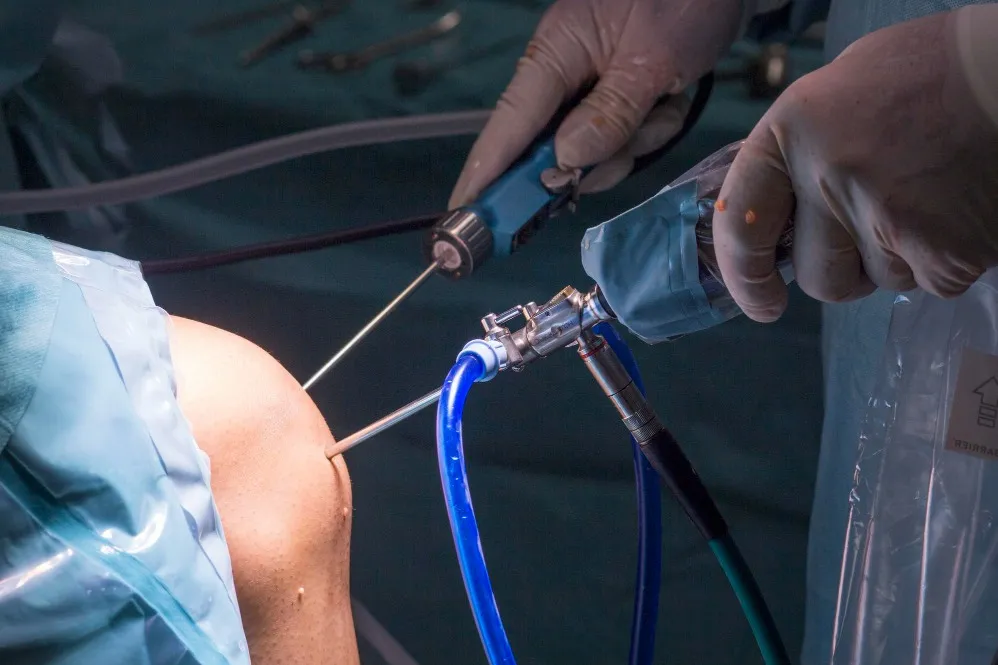
Persistent knee pain can come from several structures, including cartilage, menisci, ligaments, tendons, and the joint surfaces themselves. When symptoms continue despite appropriate conservative care, Knee Arthroscopy may be considered for selected knee conditions after a detailed orthopedic assessment.
Arthroscopy is a minimally invasive surgical technique in which a small camera is introduced into the knee through a small incision. Additional small instruments can be used when a particular problem needs surgical treatment.
Knee Symptoms Do Not Automatically Mean Arthroscopy
One of the most important points for patients is that arthroscopy is not a universal solution for knee pain.
Many knee conditions respond to non-surgical measures such as physiotherapy, activity modification, strengthening, weight management when relevant, and appropriate medication. The usefulness of arthroscopy depends on the underlying diagnosis rather than pain intensity alone.
An orthopedic specialist may consider the procedure when there is a clearly identified structural problem that can potentially be addressed arthroscopically.
Conditions Need Individual Evaluation
Meniscal injuries are a common reason people hear about arthroscopic procedures. Yet even meniscal tears are not all treated in the same way.
Age, tear pattern, location, symptoms, activity level, associated ligament injuries, and the condition of the surrounding joint all influence treatment.
Other selected conditions involving loose fragments, cartilage, or certain ligament-related problems may also involve arthroscopic techniques as part of management.
Mechanical Symptoms Deserve Attention
Patients sometimes describe catching, locking, giving way, swelling, or difficulty fully bending and straightening the knee. These symptoms can provide clues about what is happening inside the joint.
A proper evaluation usually combines the history of the problem with physical examination. Imaging such as X-rays and MRI may be recommended depending on the suspected condition.
The objective is to identify the actual source of symptoms before discussing surgery.
Arthroscopy and Open Surgery Are Different Approaches
Traditional open procedures require a larger surgical exposure. Arthroscopy uses smaller access points and a camera to view the inside of the joint.
The smaller incisions associated with arthroscopy can be advantageous for suitable procedures, but the technique still involves surgery. Patients need to understand anesthesia, postoperative care, rehabilitation, possible complications, and expected recovery before proceeding.
Ask What Rehabilitation Will Involve
The operation is only one stage of treatment. Rehabilitation after arthroscopy depends heavily on what was done inside the knee.
Recovery after a relatively limited procedure may differ considerably from rehabilitation following a meniscal repair or ligament reconstruction. Patients should understand weight-bearing instructions, exercise progression, work restrictions, and the likely timeline for returning to sports.
For people considering knee treatment in Kalamboli, Maharashtra, Dhanvantari Hospital can assess persistent knee symptoms and determine whether conservative treatment should continue or whether a surgical option may be clinically appropriate.
The key question is not simply whether arthroscopy is available. It is whether the identified knee problem is likely to benefit from that specific procedure. A diagnosis-led approach helps patients avoid unnecessary interventions while ensuring potentially treatable structural problems receive appropriate attention.
Keywords