
Foot or ankle pain that continues after rest, better footwear, physiotherapy or medication deserves a diagnosis rather than an automatic operation. You will learn how long to wait before seeking specialist review, which warning signs require urgent care, how doctors test the cause, and when surgery offers more benefit than continued non-surgical treatment.
Key takeaways
- Seek review after two to four weeks of persistent symptoms despite sensible self-care.
- Tests identify whether pain comes from bone, tendon, ligament, joint or nerve damage.
- Surgery follows a documented failure of appropriate conservative treatment.
- Ask about alternatives, risks, recovery time and the operation’s expected benefit.
When Ongoing Foot or Ankle Symptoms Need Medical Review
Arrange a specialist review when persistent foot pain or persistent ankle pain continues beyond two to four weeks despite rest, footwear changes, activity modification, physiotherapy or suitable medication. Book sooner if symptoms are worsening, repeatedly returning, or limiting walking, work, sleep or balance.
Persistent foot and ankle symptoms do not prove that you need surgery; they require a confirmed diagnosis and an assessment of non-surgical options.
| Symptom or situation | What to do | Why it matters |
|---|---|---|
| Open wound, visible bone or an open fracture | Seek emergency care now | Infection and tissue damage require urgent antibiotics and surgical assessment |
| Deformity after an injury or inability to bear weight | Seek urgent assessment today | A displaced fracture or major ligament injury needs prompt imaging and treatment |
| Cold, blue, pale or numb foot | Seek emergency care now | Circulation or nerve compression can threaten the foot |
| Rapidly increasing swelling, severe pain or tight skin | Seek urgent assessment today | This can indicate serious injury, bleeding or pressure |
| Hot, red, swollen joint with fever or severe illness | Go to an emergency department now | Septic arthritis can rapidly damage cartilage and requires urgent testing and treatment |
Do not use symptom duration alone to decide on an operation. Plantar fasciitis often improves without surgery; release is generally considered only after six to 12 months of well-directed treatment that remains disabling.
Specialist review is also important for ongoing instability, weakness, stiffness or suspected tendon, fracture or arthritis problems, even when an X-ray abnormality seems minor.
The Diagnoses and Tests That Shape the Surgical Decision
A surgical decision starts with a diagnosis, not a pain score. An unhealed fracture, malunion, symptomatic bunion, rigid flatfoot, ankle arthritis, impingement, tendon tears or chronic ankle instability can all lead to surgery when they limit function and the examination confirms a correctable problem.
An Achilles tendon rupture differs from chronic tendinopathy, which usually needs about six months of failed nonsurgical care before surgery is considered.
| Test | What it identifies | How it changes treatment |
|---|---|---|
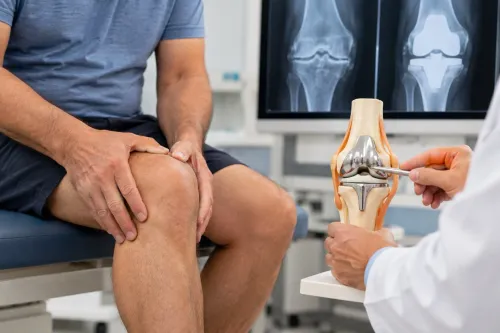
| Examination | Deformity, instability, tendon strength, joint motion and tender areas | Separates mechanical failure from pain treatable with rehabilitation |
| Weight-bearing X-rays | Alignment, arthritis, malunion, collapse and displaced fractures | Shows whether correction, fixation or fusion is appropriate |
| Ultrasound | Dynamic tendon tears, Achilles damage and fluid | Helps assess tendons while they move |
| CT or MRI | CT maps complex bone injury; MRI shows cartilage, marrow, ligaments and tendons | Defines fracture fixation, reconstruction or nonoperative care |
| Gait assessment | Abnormal loading, weakness and compensating movement | Guides orthotics, rehabilitation or alignment surgery |
| Blood or nerve tests | Infection, inflammatory disease, diabetes-related nerve damage or nerve compression | Prevents treating an underlying medical or neurological cause as a structural one |
Repeated giving-way after rehabilitation, confirmed mechanical instability and disabling tendon rupture strengthen the case for repair or reconstruction. A stress fracture at the navicular, talus, proximal fifth metatarsal or sesamoid needs reassessment because delayed union or nonunion can require fixation.
Fever with a hot joint, an open fracture or rapidly worsening swelling requires urgent assessment, aspiration or debridement rather than routine testing.
What Failed Conservative Treatment Looks Like in Practice
Before elective surgery, you need a confirmed diagnosis and a documented trial of appropriate non-surgical treatment. The exact duration depends on the problem, but the record should show what you tried, for how long, whether you followed it, and what function remains lost.
1. Reduce or change the provoking activity, then gradually reload the foot under guidance. Persistent pain that returns with ordinary walking, work or stairs despite this adjustment is meaningful evidence of failure.
2. Use supportive footwear, an ankle brace, taping or orthotics when alignment, instability or pressure contributes to symptoms. Record whether you can walk farther, stand longer or wear normal shoes; unchanged limits after a proper fit suggest the measure has not worked.
3. Address body weight when it increases load, and use a safe anti-inflammatory medicine only if a clinician confirms it suits your stomach, kidneys, blood pressure and other medicines. Ongoing symptoms despite a safe, adequate trial do not prove surgery is needed, but they support review.
4. Complete supervised rehabilitation, including physiotherapy for foot pain, strength, balance, mobility and gait training. A therapist’s notes can show persistent weakness, restricted motion or instability rather than relying on pain alone.
5. Consider an injection when it matches the diagnosis. Continued pain, swelling or loss of useful function after the injection’s expected effect, alongside examination and imaging findings, supports a surgical discussion.
Surgery is not justified by an abnormal X-ray alone. Open fractures and suspected joint infection need urgent treatment, not a prolonged conservative trial.
Matching the Operation to the Problem
Pain does not identify the operation. Examination, weight-bearing X-rays and, when needed, MRI or CT must show whether the problem is damaged cartilage, an unstable ligament, a torn tendon, a deformity, an unhealed fracture or an arthritic joint.
| Option | What it addresses | What the procedure does |
|---|---|---|
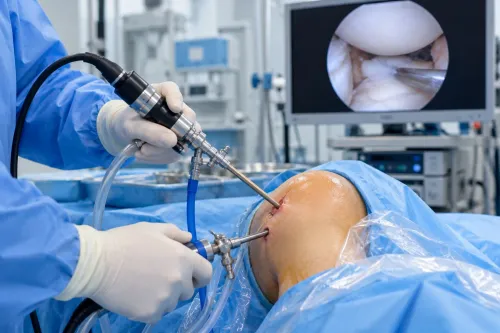
| Ankle arthroscopy | Impingement, loose bodies or selected cartilage damage | Uses a camera and small instruments to treat problems inside the joint |
| Ligament reconstruction | Repeated ankle giving-way from confirmed instability | Repairs or replaces stretched or torn stabilising ligaments |
| Tendon repair | A torn Achilles or other tendon with loss of useful function | Reconnects tendon ends or restores their attachment |
| Fracture fixation | Displaced, unstable or high-risk fractures | Holds bone with screws, plates, pins or a rod while it heals |
| Bunion correction surgery | Painful hallux valgus that limits walking or ordinary shoes | Realigns the big toe and, when needed, the first metatarsal |
| Osteotomy | Flexible deformity or abnormal bone alignment | Cuts and repositions bone to correct load and shape |
| Fusion | A painful, rigid or severely arthritic joint | Permanently joins bones to remove movement and joint pain |
| Ankle replacement | Advanced ankle arthritis with suitable bone and soft-tissue conditions | Replaces worn joint surfaces while preserving some motion |
Adult-acquired flatfoot illustrates why operations are combined: a flexible deformity may need tendon work and osteotomy, while a rigid, arthritic foot may require fusion. A painless bunion does not become an indication simply because an X-ray angle looks abnormal.
At Dhanvantari Hospital, ask which diagnosis each proposed procedure targets, what finding supports it, and what function it is expected to restore.
Risks, Recovery and Questions Before You Consent
Consent should include the price of recovery, not only the procedure. Ask how long you will use crutches, a boot or non-weight-bearing restrictions, and when work, driving, exercise and sport are realistic. Foot and ankle surgery recovery can outlast wound healing, and missed rehabilitation can undermine a technically successful repair.
Smoking, diabetes, poor circulation, neuropathy, obesity, steroid use and immunosuppression raise the chance of wound breakdown, infection, nerve injury and delayed bone healing. Your surgeon may require smoking cessation or better blood-sugar control before elective surgery. Weigh these surgery risks against pain, instability and loss of function.
Ankle arthritis illustrates the trade-off:
| Option | Main benefit | Cost or limitation |
|---|---|---|
| Ankle fusion | Durable pain relief | Removes ankle motion and can increase stress on neighbouring joints |
| Ankle replacement | Preserves some motion | Implant loosening, failure and later revision remain possible |
| Continued non-surgical care | Avoids surgical risks | Pain or restricted function may persist |
Ask these questions before signing:
- What function should I expect at six and twelve months?
- How many weeks will I avoid full weight-bearing, and what rehabilitation follows?
- What joint motion will this operation remove or limit?
- What happens if I choose bracing, injections, physiotherapy or observation instead?
- How do smoking, diabetes, circulation or neuropathy change my infection and healing risk?
- What complication would require another operation?
Frequently asked questions
When should persistent foot or ankle symptoms receive medical review?
Arrange a specialist review when pain continues beyond two to four weeks despite rest, footwear changes, activity modification, physiotherapy or suitable medication. Seek help sooner when symptoms worsen, return repeatedly, or limit walking, work, sleep or balance.
Which diagnoses and tests influence the decision to operate?
The decision depends on the identified problem, such as a fracture, arthritis, tendon disorder, ligament injury, deformity or nerve compression. Examination and tests such as weight-bearing X-rays, ultrasound, MRI or CT scans help define the damaged structure and guide treatment.
What counts as failed conservative treatment?
It means completing an appropriate non-surgical plan, such as activity modification, suitable footwear, physiotherapy, medication or immobilisation, without enough improvement. Your clinician should review whether the treatment was used correctly, long enough and for the confirmed diagnosis.
What should you ask before consenting to foot or ankle surgery?
Ask which operation matches your diagnosis, what benefit to expect, the alternatives, specific complications, anaesthesia risks, weight-bearing restrictions, wound care, physiotherapy, time away from work and the likely recovery timeline.