
A hand injury needs more than a diagnosis: the important question is whether the damaged bone, tendon, nerve, ligament or joint can recover useful movement without an operation. You will learn which signs require urgent assessment, when non-surgical care is reasonable, and how doctors match a procedure to tasks such as gripping, pinching, writing and returning to work.
Key takeaways
- Seek emergency care for uncontrolled bleeding, a blue or cold finger, numbness, or exposed bone.
- Tendon, nerve, blood-vessel, ligament, and displaced fracture injuries often need specialist repair.
- Splinting, therapy, injections, or activity changes may restore function without surgery.
- Measure grip, pinch, movement, sensation, pain, and work limitations before choosing treatment.
Which hand injuries need emergency assessment?
Uncontrolled bleeding, a pale or blue finger, loss of sensation, or a cold finger requires emergency assessment because blood flow or nerve function may be threatened. Exposed bone indicates an open hand fracture; severe deformity, a deep contaminated wound, or a severe crush injury also needs urgent specialist care.
Seek immediate help if you cannot flex or extend a digit, or if finger dislocation symptoms include obvious displacement, severe swelling, or a joint locked out of position. Do not force a dislocation back into place. Cover an open wound with clean dressing, remove rings, keep the hand still, and go to an emergency department.
- A clinician will ask how the injury happened, because a cut, twist, fall, bite, or crushing force points to different damage.
- They will inspect the skin, wound depth, tendon movement, circulation, and sensation, then test range of motion.
- They will compare finger alignment, strength, colour, temperature, and movement with the uninjured hand.
- X-rays look for fractures or dislocations; ultrasound, CT, or MRI may be needed for tendon, ligament, nerve, or hidden bone injury.
| Situation | What it may indicate | Appropriate action |
|---|---|---|
| Uncontrolled bleeding, blue finger, exposed bone | Vessel injury or open fracture | Emergency assessment now |
| Severe deformity, dislocation, inability to move | Fracture, joint or tendon disruption | Emergency or hand specialist assessment |
| Small clean wound with normal movement and sensation | Superficial injury | Routine orthopaedic appointment if symptoms persist |
Which traumatic injuries are more likely to need repair?
Repair is more likely when injury has changed alignment, continuity or stability in a way that splinting alone cannot reliably correct. Displaced, shortened, unstable or joint-involving fractures need particular attention; a fracture that looks straight from the front may still be rotated.
| Injury | Why early restoration matters | Findings that increase concern |
|---|---|---|
| Hand fracture | Prevents malunion, stiffness and lost grip | Displacement, shortening, instability, joint involvement or rotation |
| Scaphoid fracture | Protects against nonunion and avascular necrosis | Persistent tenderness despite normal X-rays, displacement, proximal-pole injury or established nonunion |
| Tendon injury | Restores smooth finger movement before scar blocks gliding | Flexor tendon laceration or extensor tendon rupture |
| Nerve or ligament injury | Supports sensation, pinch and joint stability | Digital nerve injury, complete ligament tear or an unstable joint |
| Thumb injury | Preserves opposition, pinch and load-bearing strength | Displaced fracture, unstable joint or ligament disruption |
To check rotation, slowly make a fist and compare both hands. Finger overlap or scissoring indicates deformity and can justify unstable hand fracture surgery even when the finger appears acceptable at rest.
Mallet finger is an important exception: continuous splinting often restores fingertip extension. Surgery becomes more likely when a large fracture fragment, joint subluxation or failed alignment prevents the splint from holding the joint correctly.
Treat flexor tendon lacerations and other tendon injuries promptly. Delay can produce scarring and adhesions, turning a straightforward repair into tendon grafting or tendon transfer.
Which hand disorders may eventually need surgery?
Carpal tunnel release treats median-nerve compression, not nonspecific hand or wrist pain. Numbness or tingling in the thumb, index, middle and thumb-side ring finger, night symptoms, weak pinch or thenar wasting support the diagnosis.
Electrodiagnostic testing can confirm severity or another nerve disorder; corticosteroid injection may give short-term relief, but persistent, recurrent or progressive symptoms justify release.
- Trigger finger surgery releases the thickened A1 pulley when catching or locking continues after splinting or injection, or returns after temporary improvement.
- Dupuytren contracture pulls fingers into the palm. Surgery is reasonable when you cannot place the hand flat or the bend prevents washing, dressing, gripping or placing a hand in a pocket; correction may remain incomplete and recurrence is possible.
- A painless ganglion cyst needs observation. Choose ganglion cyst removal when pain, pressure, restricted movement or repeated recurrence makes it troublesome; aspiration can recur because its stalk remains.
- Thumb-base arthritis deserves surgery only when splints, activity changes, medicines, injection and hand therapy no longer control substantial pain and loss of pinch.
| Procedure | Main trade-off | When it may fit |
|---|---|---|
| Trapeziectomy, with or without ligament reconstruction or tendon interposition | Removes the arthritic trapezium; recovery is lengthy and strength may not fully return | Painful thumb-base arthritis with failed non-operative care |
| Arthrodesis | Provides stability but sacrifices joint motion and can fail to unite | Selected joints or patients needing strong pinch |
| Implant arthroplasty | Preserves motion but risks loosening, wear or revision | Carefully selected joints and patient demands |
No operation guarantees normal motion: stiffness, persistent pain, nerve symptoms and recurrence remain possible.
How do surgery and non-surgical care compare?
Choose the option that best protects a specific function, not the most impressive X-ray. Observation, medication, splinting, casting, injections and hand therapy suit injuries that remain aligned, stable and usable; surgery becomes more persuasive when deformity, weakness, persistent pain, nerve damage or instability threatens that function. Non-operative care avoids anaesthesia, wounds and surgical complications.
| Option | What surgery can restore | What to weigh against it |
|---|---|---|
| Hand fracture fixation | Plates, screws, wires or an external fixator restore alignment and stability | Casting or splinting avoids wounds, but unstable or rotated fractures can heal poorly |
| Tendon repair | Reconnects a cut tendon | Tendon repair rehabilitation is lengthy; delay increases adhesions and may require grafting or transfer |
| Ligament repair or reconstruction | Restores joint stability | Bracing and therapy avoid surgery, but ongoing instability can limit grip |
| Nerve repair or decompression | Reconnects an injured nerve or relieves pressure | Recovery is slow, and numbness or weakness may remain |
| Release procedures | Frees a compressed nerve or thickened pulley | Injection or splinting can help temporarily; recurrence or weakness may justify release |
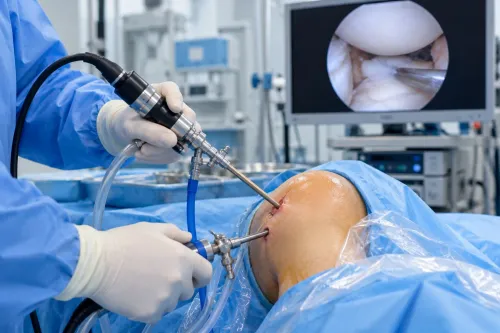
| Arthroscopy | Treats selected cartilage, ligament or joint problems through small portals | Less tissue disruption does not eliminate stiffness or reoperation |
| Joint reconstruction or replacement | Rebuilds or replaces a damaged joint | Medication, injection, splinting and therapy avoid implant risks but may not control severe pain |
Both paths can require immobilisation, hand therapy after surgery or regular attendance, wound care and time away from work. Surgery adds scar sensitivity, infection, stiffness and anaesthetic risks; non-operative care can still leave malunion, tendon adhesions, nerve symptoms or incomplete recovery. Recovery ranges depend on the injury and the treating surgeon’s plan.
How is better hand function measured before choosing surgery?
A useful operation has a measurable target, not merely a better-looking X-ray. Your doctor may record whether you can make a fist, fully extend each finger, pinch, grip, turn a key, write, dress, lift an object, or return to work or sport.
| Goal | Assessment | What surgery must improve |
|---|---|---|
| Making a fist or gripping | Finger rotation, tendon movement, strength and X-rays | Alignment, tendon continuity or stability |
| Pinching, writing or turning a key | Thumb opposition, sensation, pain and comparison with the other hand | Thumb position, nerve function or joint movement |
| Lifting, dressing or returning to work or sport | Task-specific weakness, range of motion and job demands | Useful strength and controlled movement, not perfect imaging |
Examination shows whether a tendon moves, a nerve supplies sensation, a joint is stable and circulation is intact. X-rays show fractures and alignment; ultrasound can assess tendons, CT defines complex joint or fracture anatomy, and MRI can reveal soft-tissue, ligament or cartilage damage.
The uninjured hand provides your personal baseline. A small difference may matter to a pianist, mechanic or athlete but not to someone with lighter demands. Delaying treatment can produce stiffness, weakness, malunion, chronic instability, loss of grip strength or loss of pinch.
Ask for condition-specific hand function after surgery, therapy appointments, splinting, driving advice and work restrictions. People searching “orthopaedic hand assessment Panvel” can use Dhanvantari Hospital in Panvel to coordinate examination, imaging, conservative care, surgery or rehabilitation.
Related service
Hand, Foot and Ankle Surgery At Dhanvantari Hospital, Dr. Anand Upadhye and Dr. Sushant Upadhye provides advanced diagnosis and surgical treatment for various hand, foot, and... View service → |
Frequently asked questions
Which hand injuries need emergency assessment?
Uncontrolled bleeding, a pale or blue finger, loss of sensation, a cold finger, exposed bone, severe deformity, deep contamination, and severe crush injuries need urgent assessment.
Which traumatic hand injuries are more likely to need repair?
Cut or ruptured tendons, damaged nerves or blood vessels, unstable or displaced fractures, joint dislocations, and severe ligament injuries are more likely to require repair.
Which hand disorders may eventually need surgery?
Conditions such as carpal tunnel syndrome, trigger finger, thumb-base arthritis, Dupuytren’s contracture, and persistent tendon disorders may need surgery when symptoms continue despite appropriate non-surgical care.
How do surgery and non-surgical care compare for hand problems?
Non-surgical care can include splinting, therapy, medication, injections, and activity changes. Surgery may restore damaged structures but involves anaesthesia, wound care, rehabilitation, and surgical risks.
How is better hand function measured before choosing surgery?
Assessment compares grip and pinch strength, finger and wrist movement, sensation, pain, dexterity, hand use at work or home, and imaging findings with the unaffected hand.