Pain or an abnormal scan does not automatically mean you need an operation. The deciding factors are the condition, the damage, the effect on movement and nerve or blood supply, and whether appropriate non-surgical treatment has worked; by the end, you will know which findings call for urgent care and which justify a planned surgical discussion.
Key takeaways
- Seek emergency care for open fractures, blue or pale limbs, numbness, deformity, or no pulse.
- Doctors weigh imaging, symptoms, function, risks, and non-surgical treatment before recommending surgery.
- Ligament tears, unstable fractures, arthritis, and nerve compression can require different operations.
- Ask about alternatives, expected recovery, complications, implant choice, and the surgeon’s experience.
Which bone and joint problems need emergency orthopaedic assessment?
A limb needs emergency assessment after injury if it has an open fracture, a pale or blue limb, loss of sensation, severe deformity, or no reliable pulse. Call emergency services, keep the limb still, cover an open wound with a clean dressing, and do not push exposed bone back or straighten the deformity.
| Problem | Warning signs | Why it is urgent |
|---|---|---|
| Open fracture | Bone or deep wound communicates with the fracture | Infection risk requires prompt antibiotics, surgical cleaning and stabilisation |
| Compartment syndrome | Severe pain out of proportion, tense swelling, pain when fingers or toes are passively stretched, new weakness or numbness | Pressure can destroy muscle and nerves; fasciotomy must not wait for a pressure reading when the clinical picture is convincing |
| Spinal cord or cauda-equina injury | New paralysis, worsening weakness, saddle numbness, urinary retention or incontinence after back injury | Delay can cause permanent neurological loss |
| Septic arthritis | Suddenly hot, swollen, extremely painful joint with fever or inability to bear weight | Aspiration, cultures, antibiotics and drainage protect cartilage and prevent sepsis |
| Paediatric elbow fracture | A displaced supracondylar fracture, threatened skin, an absent pulse or a poorly perfused hand | The brachial artery and median, radial or ulnar nerves can be injured; urgent reduction and pin fixation may be needed |
Do not wait for routine orthopaedic follow-up if symptoms are worsening. A cold, blue or numb hand or foot is an emergency even when the visible injury looks minor, and late loss of pulses is not required for compartment syndrome.
How do doctors decide whether surgery is necessary?
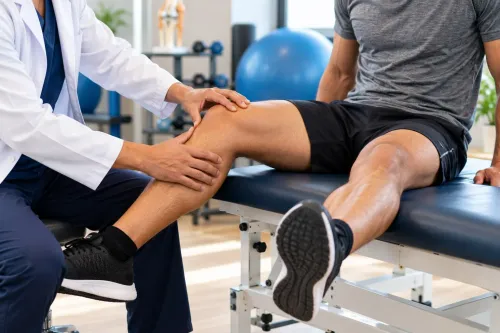
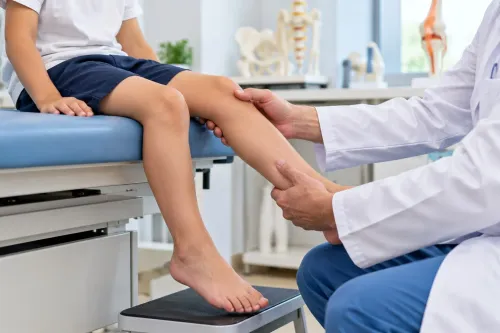
Surgery becomes reasonable when the diagnosis, symptoms, examination findings and likely benefit point in the same direction. During an orthopaedic consultation, the doctor tests strength, movement, stability, sensation and function, then asks how the problem limits walking, work, sleep or daily activities.
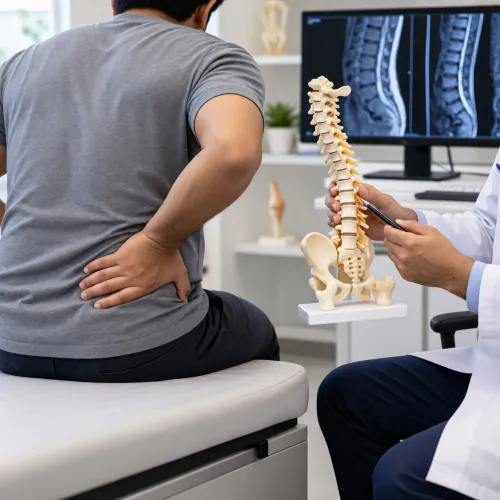
Imaging answers different questions. An X-ray shows alignment, fractures, joint-space loss and arthritis. A CT scan gives detailed views of complex fractures and bone shape. An MRI scan shows discs, cartilage, menisci, ligaments, tendons and bone marrow. Ultrasound can assess superficial tendons, fluid, bursae and movement in real time.
The scan supports the examination; it does not replace it.
- Immobilisation protects a fracture, sprain or unstable joint while tissues heal.
- Physiotherapy restores strength, movement, balance and function.
- Injections can reduce inflammation or pain in selected joints, but they do not repair a displaced fracture or torn ligament.
- Observation means planned review while symptoms, imaging and function are monitored.
- An operation repairs, removes, stabilises, replaces or decompresses a damaged structure when non-operative care is unlikely to restore useful function.
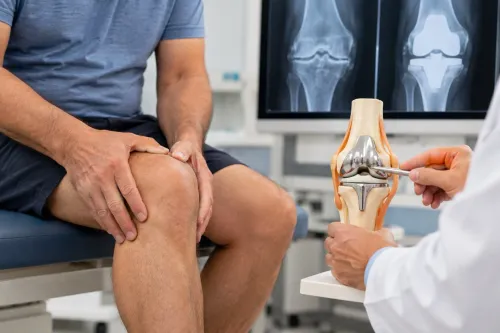
An abnormal scan alone does not justify surgery. A painless rotator-cuff tear, age-related meniscal change or severe-looking knee X-ray can exist with mild symptoms. Doctors weigh pain, weakness, instability, mechanical locking, progression and response to appropriate treatment; a degenerative meniscal tear or osteoarthritis often starts with rehabilitation rather than arthroscopy.
The decision changes when symptoms remain disabling, damage is acute and repairable, or neurological function is deteriorating.
Which common joint and soft-tissue conditions are more likely to need surgery?
Surgery becomes more likely when pain or weakness continues to limit walking, work, sleep or daily tasks despite structured rehabilitation, or when the joint repeatedly gives way, dislocates or contains acute repairable damage.
| Condition | Non-surgical care | Surgery is more likely when |
|---|---|---|
| Hip or knee osteoarthritis | Exercise therapy, weight management, pain relief, injections and activity changes | Advanced osteoarthritis causes substantial pain, stiffness or loss of function, and non-surgical treatment no longer provides adequate relief; joint replacement may be considered |
| Meniscal tear | Exercise-based rehabilitation and symptom-guided activity; routine arthroscopy has limited benefit in degenerative knee disease | A displaced or acute repairable meniscal tear causes locking, persistent mechanical symptoms or ongoing disability after appropriate care |
| ACL injury | Bracing, strengthening, movement retraining and rehabilitation when the knee does not repeatedly give way | Recurrent instability, high-demand pivoting activity, combined ligament damage or an associated repairable meniscal injury makes ACL reconstruction worth discussing |
| Recurrent dislocation | Strengthening, movement modification and stabilisation exercises after the initial injury | The joint continues to dislocate or remains unstable despite rehabilitation, particularly when structural damage is present |
| Rotator cuff tear | Pain control, activity modification, physiotherapy and strengthening | An acute traumatic tear, progressive weakness, or persistent pain and functional loss after appropriate non-operative treatment supports referral for repair |
An abnormal X-ray or MRI alone does not justify an operation. Some chronic rotator cuff tears and degenerative meniscal tears cause little disability, while replacement or repair carries rehabilitation demands and procedure-specific risks. Your examination and day-to-day limitations should guide the decision.
Which bone and spine conditions commonly lead to fixation, replacement or decompression?
A displaced fracture needs more than a cast when the bone is unstable, shortened, rotated or unable to maintain alignment. Fracture fixation uses plates and screws, intramedullary nails or rods to restore position and hold the bone while it heals.
| Finding | Procedure | Why it is considered |
|---|---|---|
| Unstable or displaced fracture | Plates, screws or rods | Restores alignment when casting cannot hold the fragments or the fracture threatens movement and function |
| Displaced intracapsular hip fracture in an older adult | Hip fracture replacement, using partial or total arthroplasty | Fixation has substantial risks of non-union and avascular necrosis; replacement usually gives a more reliable route to mobilisation |
| Disabling nerve compression | Decompression | Removes bone, disc material or thickened tissue pressing on a nerve |
| Progressive adolescent idiopathic scoliosis | Posterior spinal fusion | Stops progression and corrects a deformity when growth, balance, symptoms and curve progression justify the risks |
A displaced supracondylar fracture in a child commonly needs urgent reduction and percutaneous pin fixation because it can injure the brachial artery or median, radial or ulnar nerves. A pale, cold or pulseless hand requires emergency management.
Decompression is not justified by an abnormal scan alone. Lumbar stenosis or a disc herniation becomes a stronger surgical indication when leg pain or walking limitation remains disabling after non-operative care, weakness progresses, or cauda-equina signs appear. New urinary retention, saddle numbness or severe bilateral symptoms require urgent assessment.
For scoliosis, surgeons assess progression and skeletal maturity rather than using the curve angle alone; fusion is commonly discussed near 45–50 degrees or above when the curve is progressive.
How do surgical choices differ by body area, and what should you ask at consultation?
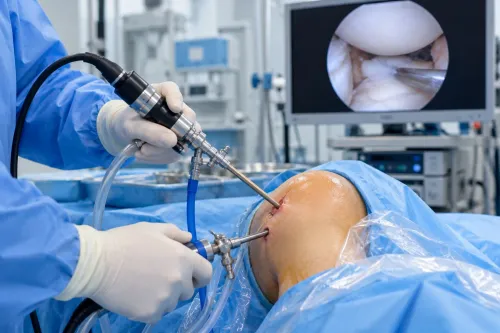
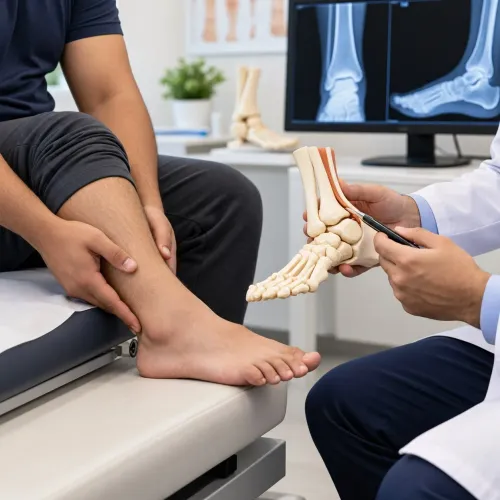
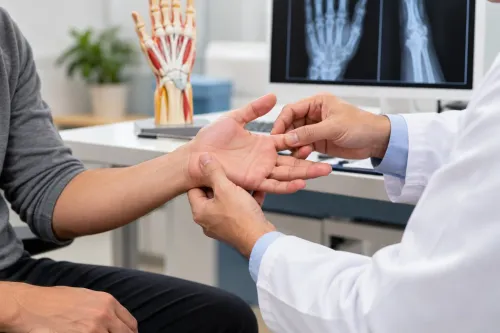
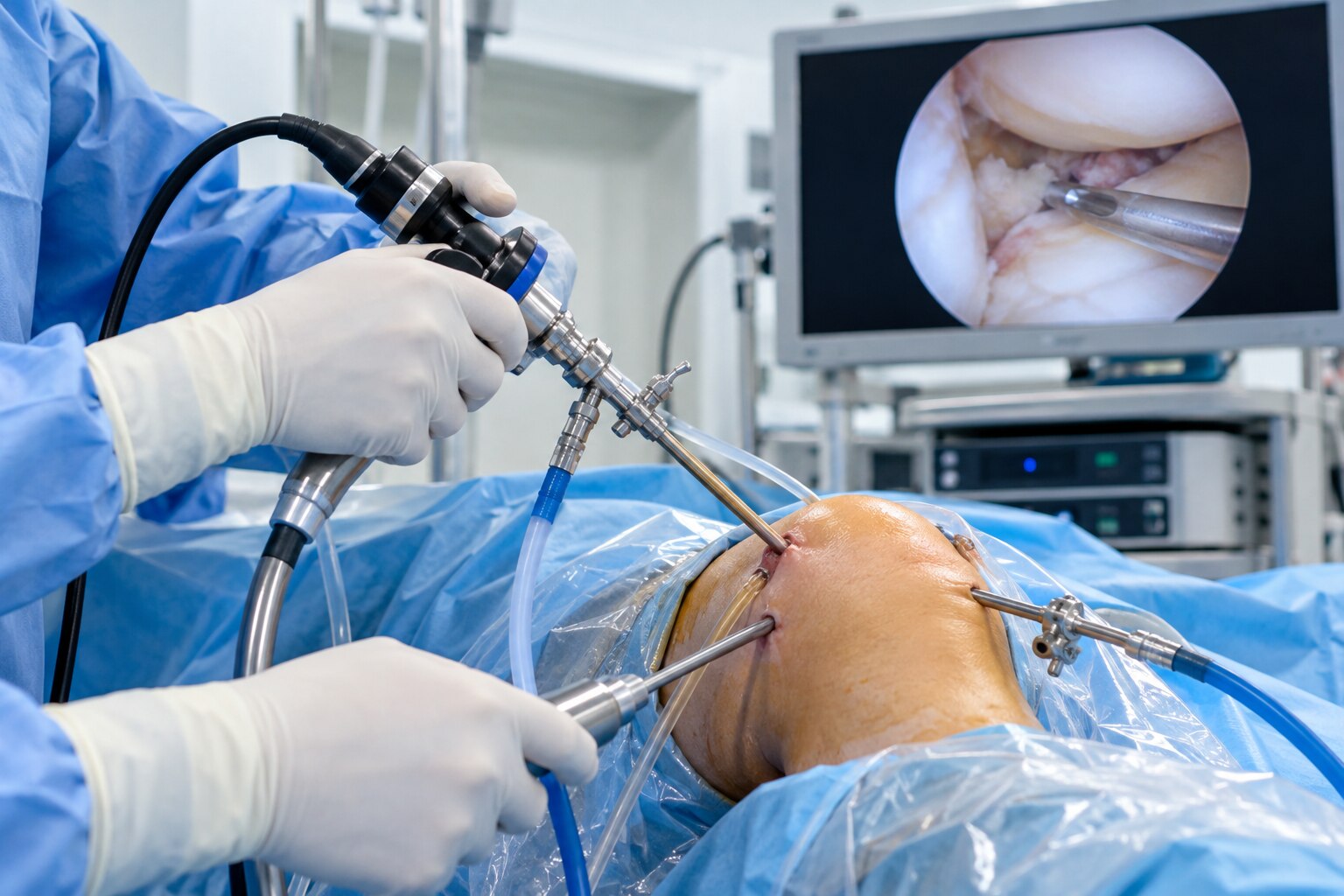
Hip replacement and knee replacement address worn joint surfaces, not every source of hip or knee pain. Knee arthroscopy treats selected meniscal or cartilage problems; shoulder arthroscopy may repair a traumatic rotator-cuff tear or stabilise recurrent dislocation. Hand and ankle procedures must match the tendon, nerve, ligament, bone or deformity involved.
| Option | What it addresses | When it applies |
|---|---|---|
| Hip or knee replacement | Replaces damaged joint surfaces | Pain and functional loss persist despite appropriate non-surgical care |
| Knee or shoulder arthroscopy | Repairs or removes selected internal damage | Mechanical locking, an acute repairable tear, instability or persistent loss after rehabilitation |
| Hand or ankle procedure | Restores a specific tendon, nerve, ligament, bone or deformity | Function remains limited or the structure is unstable |
| Fracture fixation or spine surgery | Stabilises bone or relieves nerve or cord pressure | Displacement, instability, progressive neurological deficit or deformity |
Fracture fixation uses plates, screws or rods; it is not an alternative to replacement for a displaced intracapsular hip fracture. Spine surgery has different aims again, such as decompression for disabling nerve compression or fusion for progressive deformity.
At Dhanvantari Hospital in Panvel, ask the orthopaedic team to connect your examination and scans to a specific treatment decision, rather than treating an image alone.
Ask at consultation:
- What is the exact diagnosis, and which examination or scan proves it?
- What is the operation meant to restore: pain relief, stability, movement, strength or nerve function?
- What are the alternatives, and what happens if I wait?
- How urgent is treatment, and what makes the timing change?
- How long will protection, physiotherapy and return to work or sport take?
- Which movements, strength or activities might remain limited after surgery?
Related services
Joint Replacement Surgery At Dhanvantari Hospital, Dr. Anand Upadhye and Dr. Sushant Upadhye provides advanced Joint Replacement Surgery for patients suffering from severe... View service → |
Arthroscopy and Sports Medicine Treatment Arthroscopy and Sports Medicine Treatment At Dhanvantari Hospital, Dr. Anand Upadhye and Dr. Sushant Upadhye provides advanced Arthroscopy and Sports Medicine treatments for patients... View service → |
Frequently asked questions
Which bone and joint problems need emergency orthopaedic assessment?
Open fractures, pale or blue limbs, loss of sensation, severe deformity, or no reliable pulse need emergency assessment. Keep the limb still, cover an open wound, and do not straighten the deformity or push exposed bone back.
How do doctors decide whether surgery is necessary?
Doctors consider the diagnosis, X-rays or other imaging, pain, loss of function, instability, nerve or blood-vessel damage, healing prospects, and whether non-surgical treatment has worked.
Which common joint and soft-tissue conditions are more likely to need surgery?
Severe ligament or tendon tears, unstable joint injuries, advanced arthritis, recurrent dislocation, and soft-tissue damage that limits function can lead to surgery.
Which bone and spine conditions commonly lead to fixation, replacement or decompression?
Displaced or unstable fractures can require fixation, damaged joints can require replacement, and spinal nerve or cord compression can require decompression when symptoms or structural damage warrant it.
What should you ask at an orthopaedic surgery consultation?
Ask about the diagnosis, non-surgical alternatives, the proposed procedure, implant or fixation choice, risks, recovery timeline, restrictions, rehabilitation, and signs of complications.
Related services
Hand, Foot and Ankle Surgery At Dhanvantari Hospital, Dr. Anand Upadhye and Dr. Sushant Upadhye provides advanced diagnosis and surgical treatment for various hand, foot, and... View service → |
Back Pain And Joint Pain Clinic Back Pain And Joint Pain Clinic At Dhanvantari Hospital, Dr. Anand Upadhye and Dr. Sushant Upadhye offers specialized diagnosis and treatment for back pain, joint pain, neck pain,... View service → |
Accident and Trauma Surgery At Dhanvantari Hospital, Dr. Anand Upadhye and Dr. Sushant Upadhye provides expert Accident and Trauma Surgery treatment for patients suffering from... View service → |
Paediatric Orthopedics Treatment Paediatric Orthopedics Treatment Dr. Anand Upadhye and Dr. Sushant Upadhye at Dhanvantari Hospital provides specialized paediatric orthopedics care for children with bone, joint,... View service → |