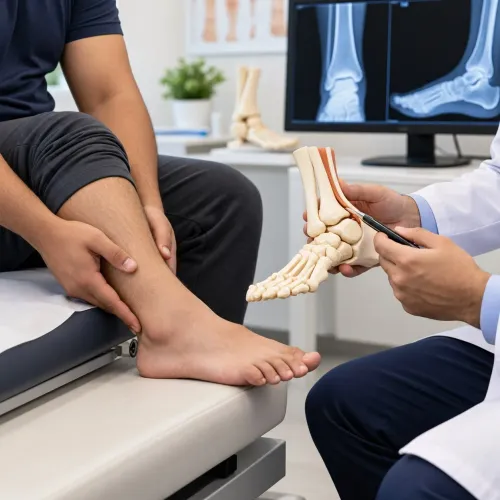
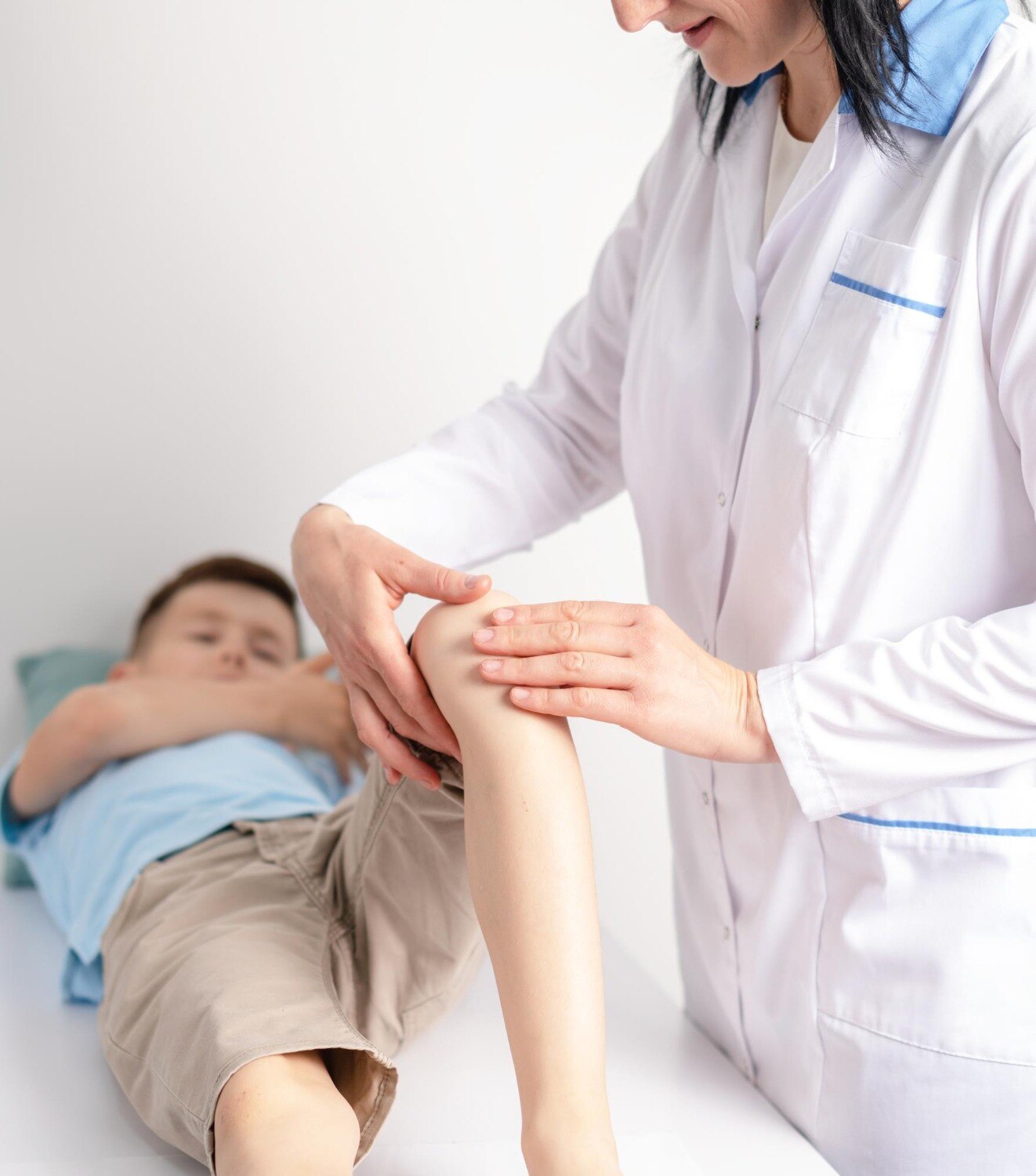
A limp, unusual leg position, frequent falls, or a visible change in alignment can be part of normal development—or a sign of injury, infection, hip disease, or a movement disorder. By the end, you will know which findings need emergency care, which deserve a planned evaluation, what to observe at home, and what to bring to the appointment.
Key takeaways
- Seek same-day care if your child suddenly refuses to walk or cannot bear weight.
- Fever, severe pain, or a hot swollen joint needs urgent assessment.
- Bring growth records, previous scans, treatment notes, and a list of symptoms.
- Ask about follow-up when alignment, growth, or walking changes over time.
Which signs mean your child needs urgent or prompt assessment?
Same-day assessment is needed if your child suddenly refuses to walk or cannot bear weight. Treat it as especially urgent with fever, severe pain, a hot or swollen joint, or an unwell appearance: septic arthritis can damage a joint quickly.
| Warning sign | What to do | Why it matters |
|---|---|---|
| Sudden inability to walk, fever, or a hot joint | Seek same-day medical care | Infection inside a joint is an emergency |
| Visible deformity, severe swelling, cold or pale limb, numbness, or loss of movement after injury | Go for urgent assessment | A fracture, dislocation, blood-flow problem, or growth-plate injury may need immediate treatment |
| Persistent or worsening symptoms without injury | Arrange prompt review | Infection, inflammation, stress injury, or another condition needs checking |
Arrange an appointment for a persistent limp in child lasting more than about seven days, recurrent limping, a new or worsening limp, persistent pain, pain that does not settle, or night pain in children that wakes them.
Also act on weight loss, unexplained bruising, restricted joint movement, recurrent swelling, frequent falls, or a sudden change in walking.
Hip problems can appear as knee or thigh pain. Unexplained knee pain with a limp or reduced hip movement deserves examination of the hip as well.
Do not watch developmental concerns indefinitely: marked asymmetry, loss of walking skills, persistent toe walking with abnormal signs, or failure to walk independently by around 18 months warrants assessment.
Which alignment and walking patterns are normal at different ages?
Bowed legs in toddlers are commonly part of normal development. Physiologic bowing usually moves toward neutral alignment by roughly 18–24 months; knock knees often peak around ages 3–4 and then improve.
| Pattern | Expected variation | Arrange evaluation when |
|---|---|---|
| Bowing | Symmetrical in toddlers and improving toward neutral by 18–24 months | Marked, asymmetric, painful, worsening, linked to short stature, or persistent beyond the expected pattern |
| Knock knees | Often most noticeable at ages 3–4 before gradual improvement | Severe, asymmetric, progressive, painful, or persistent outside the usual age pattern |
| Flexible flat feet children | The arch appears on tiptoe or when the foot is relaxed | Pain, stiffness, weakness, a rigid foot, activity limits, or worsening deformity |
| Intoeing in children | Usually results from metatarsus adductus, internal tibial torsion, or femoral anteversion and improves with growth | Marked asymmetry, rigidity, pain, worsening, frequent falls, or functional difficulty |
Routine special shoes, braces, and exercises do not change typical intoeing. Do not use age alone to dismiss a deformity when its pattern is unusual.
Persistent toe walking needs assessment of ankle movement, calf tightness, strength, reflexes, and symmetry. Arrange review for fixed ankle tightness, weakness, abnormal reflexes, developmental concerns, loss of acquired skills, or failure to walk independently by around 18 months.
General flexibility alone is common; recurrent dislocations, persistent pain, swelling, or loss of function make evaluation more important.
Should you start with a paediatrician or book paediatric orthopaedics?
A child who cannot bear weight, suddenly refuses to walk, has fever with a painful or swollen joint, or has a cold or pale limb, numbness, or visible deformity needs same-day medical assessment. Do not wait for a routine child gait evaluation; infection, circulation problems, nerve injury, or a fracture can worsen quickly.
Start with a paediatrician when the movement concern comes with fever, weight loss, bruising, fatigue, developmental delay, generalised symptoms, or uncertainty about whether the cause is orthopaedic. The paediatrician can coordinate neurology, rheumatology, physiotherapy, or laboratory evaluation.
This is the practical answer to when to see a paediatrician for limp when the symptoms extend beyond the bones and joints.
You can book a paediatric orthopaedic referral directly for:
- Persistent or recurrent limping
- Unequal leg lengths, progressive bowing, or worsening knock knees
- Foot deformity, restricted movement, recurrent swelling, or painful hypermobility
- Persistent toe walking, marked asymmetry, or a spinal curve
- Suspected developmental dysplasia of the hip
Clinicians separate normal alignment variation from injury, infection, inflammatory disease, stress injury, vitamin D deficiency, neuromuscular conditions, connective-tissue disorders, and hip disease through history, gait and joint examination, growth review, and targeted tests. Refer an infant without pain after breech presentation or with a first-degree family history of developmental dysplasia of the hip.
What happens at the evaluation, and which records should you bring?
At a paediatric orthopaedic appointment, expect questions about pregnancy and birth, breech presentation, family history, developmental milestones, previous injuries or illnesses, pain timing, activity limits, night symptoms, falls, and whether the problem is worsening.
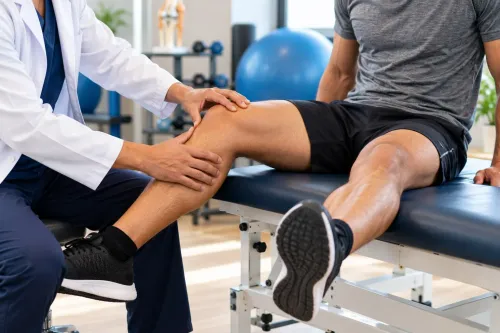
A child gait assessment includes walking and running observation, standing alignment, forward bending for rib or trunk asymmetry, hip and joint range of motion, strength, reflexes, foot posture, ankle flexibility, limb-length comparison, and review of height and growth records.
A leg length discrepancy test may include a standing block test: levelling the pelvis with blocks helps separate pelvic tilt from true leg shortening.
| Bring | Why it helps |
|---|---|
| Previous X-rays or MRI reports | Shows earlier findings |
| Growth chart or height measurements | Tracks growth pattern |
| School or sports observations | Records functional limits |
| Footwear photographs showing uneven wear | Shows loading differences |
| Short videos of walking, running, toe walking, or painful events | Captures symptoms outside the clinic |
A visible rib prominence or trunk asymmetry during forward bending is more useful than a single posture photograph when assessing scoliosis. An X-ray scoliosis Cobb angle of at least 10 degrees defines scoliosis.
Wear comfortable clothing and bring the child’s usual shoes. The clinician may ask the child to repeat a movement that causes pain, so note when symptoms begin and what stops the activity.
When are scans useful, and what follow-up might a growth problem need?
Imaging follows the examination because a scan cannot show how a child walks, bears weight, or moves a joint. Clinicians choose the smallest useful imaging field and dose, avoiding scans for many typical flexible flat feet and uncomplicated intoeing.
| Scan | What it helps assess | When it is useful |
|---|---|---|
| Standing alignment X-ray for children | Bowing, knock knees, scoliosis, limb-length difference | Suspected structural or progressive alignment problems |
| Targeted joint radiographs | Bone injury or a painful area | Localised pain, swelling, or trauma |
| Ultrasound for infant hip dysplasia | Hip position before the femoral head ossifies | Abnormal infant examination, breech presentation, or family history |
| MRI for paediatric orthopaedics | Cartilage, soft tissue, stress injury, spine, or hidden growth-plate damage | Persistent symptoms when X-rays are unrevealing |
A growth plate injury can have a normal X-ray. Localised tenderness directly over the growth plate or persistent inability to use the limb requires reassessment, because treatment follows the examination and suspected injury pattern rather than the first report.
Smaller, stable scoliosis curves in growing children may need periodic examinations and radiographs; larger or progressive curves may require bracing. Clinicians measure structural leg-length differences and use growth projections to guide follow-up. Persistent or worsening findings need review throughout growth.
At Dhanvantari Hospital in Panvel, families can arrange orthopaedic assessment when a child’s gait, alignment, growth, or movement pattern remains uncertain after initial examination.
Related service
Paediatric Orthopedics Treatment Paediatric Orthopedics Treatment Dr. Anand Upadhye and Dr. Sushant Upadhye at Dhanvantari Hospital provides specialized paediatric orthopedics care for children with bone, joint,... View service → |
Frequently asked questions
Which signs mean my child needs urgent paediatric orthopaedic assessment?
Seek same-day assessment if your child suddenly refuses to walk or cannot bear weight, especially with fever, severe pain, a hot or swollen joint, or an unwell appearance.
Which alignment and walking patterns are normal at different ages?
Children’s leg alignment and walking patterns change with growth. The evaluation distinguishes age-appropriate variation from persistent, worsening, painful, or asymmetric changes.
Should I start with a paediatrician or book a paediatric orthopaedic appointment?
Start with a paediatrician for general concerns or unclear symptoms. Book paediatric orthopaedics directly for persistent, worsening, asymmetric, painful, or clearly structural problems.
What happens during a paediatric orthopaedic evaluation?
The clinician reviews development and symptoms, watches your child walk, checks alignment, joint movement, strength, limb length, and neurological signs, then decides whether tests are needed.
When are scans useful for a child’s growth or movement problem?
Scans are useful when examination findings suggest a bone, joint, growth-plate, hip, spine, or alignment problem. The clinician chooses the test based on your child’s age and symptoms.