After an accident, the first decision is not whether to book an orthopaedic appointment; it is whether the person needs an ambulance or an emergency department immediately. You will be able to identify danger signs, protect the injury during transport and recognise when a specialist review remains necessary even if the person can walk or the first X-ray looks normal.
Key takeaways
- Call emergency services for severe bleeding, absent pulses, breathing problems or loss of consciousness.
- Do not move someone with suspected spine or neck injuries unless danger forces movement.
- Seek immediate assessment for deformity, exposed bone, numbness or a cold, pale limb.
- Arrange trauma follow-up for persistent pain, swelling, instability or reduced movement after injury.
When should you call emergency services instead of arranging an orthopaedic consultation?
Call emergency services or go straight to an emergency department when an accident may threaten life, circulation, the spinal cord or the limb. Do not wait for a routine appointment with an orthopedic trauma surgeon.
- Choose emergency care for multiple fractures, a crush injury, major blood loss, or combined injuries to the chest, abdomen, pelvis and limbs. These patterns need trauma-team assessment rather than separate clinic visits.
- Treat uncontrolled bleeding, bone visible through skin, an unusually bent limb, a cold or pale limb, blue fingers or toes, an absent or weaker pulse, new numbness, weakness or inability to move as emergencies. Severe swelling, a rapidly expanding haematoma or pain out of proportion to the injury also needs immediate assessment.
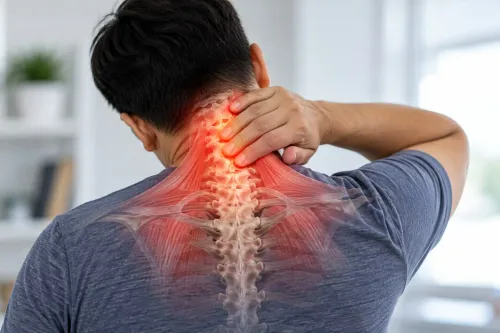
- After a high-energy accident, call for emergency spinal assessment for loss of consciousness, confusion, repeated vomiting, worsening headache, severe neck or back pain, new numbness or weakness, or loss of bladder or bowel control. Spinal cord injury can exist without an obvious deformity or dramatic X-ray finding.
Emergency teams assess airway, breathing, circulation and neurological status before definitive fracture treatment. They may control bleeding, correct shock, hypothermia or clotting problems, apply temporary stabilisation and transfer you to a major trauma centre. Definitive fixation can wait until the body is stable; a routine consultation cannot safely replace that process.
Which limb injuries need immediate trauma assessment?
Do not wait for swelling or bruising to settle if an injured limb has a circulation, nerve, skin, or structural warning sign. Arrange immediate trauma assessment for:
- Uncontrolled bleeding, an open wound over a suspected fracture, or bone visible through the skin. Treat the wound as a possible open fracture.
- A limb bent at an unusual angle, a dislocation, or a joint that looks visibly deformed—even if it appears to slip back into place.
- An absent or weaker pulse, pale or blue fingers or toes, a cold limb, or a rapidly expanding haematoma. These signs can indicate arterial injury.
- New numbness, loss of sensation, weakness, or inability to move the limb.
- Severe swelling, tightness, rapidly worsening pain, or pain out of proportion to the apparent injury.
| Finding | Why it matters | Action |
|---|---|---|
| Normal pulse with escalating pain and swelling | A normal pulse does not exclude compartment syndrome; pressure can damage muscles and nerves before circulation fails | Go to emergency care immediately |
| Bruise, mild sprain, or muscle strain with improving movement and stable swelling | These findings lack the structural or circulation warnings above | Arrange review if function or symptoms do not improve |
| Dislocation that seems reduced | Ligament, nerve, blood-vessel, or cartilage damage can remain after the joint relocates | Keep it still and obtain urgent assessment |
Pain intensity alone does not decide urgency. A modest-looking injury with numbness, deformity, colour change, or loss of movement is more concerning than a painful bruise that is steadily improving.
Which head, neck, spine and multiple-injury symptoms are emergencies?
After a high-energy accident, treat loss of consciousness, confusion, repeated vomiting or a worsening headache as an emergency head injury. Severe neck pain or back pain, new numbness, weakness, loss of sensation, inability to move, or loss of bladder or bowel control requires emergency spinal assessment.
- Call emergency services or go to an emergency department for these warning signs, even when the person is awake, walking or has no visible deformity.
- Do not rely on a normal-looking spine or a dramatic X-ray finding. A spinal cord injury can exist without either; neurological changes require urgent assessment.
- If several body regions are injured, do not arrange separate routine consultations. Multiple fractures or combined chest, abdominal, pelvic and limb injuries need trauma-team care.
| Finding | Why it matters | Correct response |
|---|---|---|
| Loss of consciousness, confusion, repeated vomiting or worsening headache | Possible serious head injury | Emergency department assessment |
| Severe neck or back pain with numbness, weakness, loss of sensation or inability to move | Possible spinal cord injury | Keep the person still and call emergency services |
| Several injured regions, major bleeding or a crush injury | Shock, bleeding, hypothermia or clotting problems can delay safe surgery | Trauma-team assessment and possible transfer to a major trauma centre |
Doctors may stabilise bleeding, restore body temperature and correct clotting or shock before definitive orthopaedic surgery. Treatment may therefore be staged rather than performed in one operation.
When is an orthopaedic trauma review needed even if you can walk?
Walking does not rule out a significant injury. Arrange orthopaedic trauma assessment after the immediate emergency has been excluded if you have:
- Focal tenderness directly over a bone or a suspected fracture
- Swelling that persists or increases
- A deformity or a joint that feels unstable
- Difficulty bearing weight normally
- Reduced use of the arm, hand, leg or foot
- Pain that is not improving
A negative X-ray does not exclude every fracture. Small, nondisplaced or early fractures can be difficult to see, so a clinician may recommend repeat X-rays after several days, CT for detailed bone assessment, or MRI for an occult fracture, cartilage injury or soft-tissue damage.
An older adult with a suspected hip fracture needs urgent hospital assessment, not a routine clinic appointment, even if they can stand or walk.
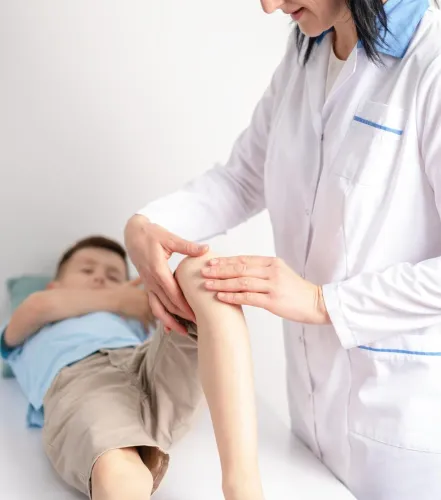
A child with focal pain near a growth plate needs reassessment for a growth plate injury when pain or reduced limb use continues; a small deformity or normal first X-ray does not reliably exclude damage that could affect future growth.
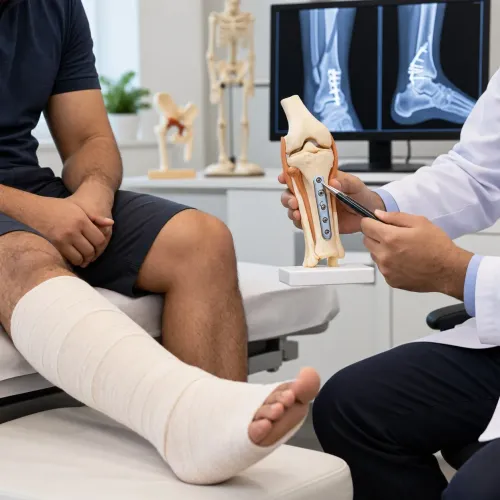
A splint or cast often requires follow-up examination and imaging to check alignment, swelling, skin condition and safe weight-bearing. Return to emergency care for worsening pain, increasing tightness, new numbness, weakness or a pale, blue or cold limb.
These signs can indicate dangerous pressure within the limb, and a normal pulse does not reliably exclude it.
What should you do before transport, and where should follow-up happen?
Keep the person still while help is coming. Use immobilisation to support the injured area in its existing position with a splint, folded clothing or cushions. Do not straighten a deformed limb, walk on a suspected lower-limb fracture or push a protruding bone back under the skin.
- Cover an open wound with a clean dressing without pressing on visible bone.
- Remove rings and watches before swelling increases.
- Do not massage the injury, apply early heat or give food and drink when emergency surgery could be needed.
For first aid after an accident, use an ice pack only when the skin has normal sensation and circulation. Wrap it in cloth, apply it for about 15 to 20 minutes, then remove it; never place ice directly on skin or use it over numb, pale, blue or poorly circulating tissue.
Where should you go next?
| Place | What to do | When it applies |
|---|---|---|
| Emergency department | Use emergency transport or go immediately | Uncontrolled bleeding, bone through skin, absent or weaker pulse, pale or blue digits, severe swelling, rapidly expanding bruising, new numbness or weakness |
| Orthopaedic follow-up | Arrange specialist review and repeat examination or imaging | A non-life-threatening injury still has focal bone pain, swelling, deformity, instability or abnormal weight-bearing |
| Local Panvel review | Discuss orthopaedic follow-up at Dhanvantari Hospital | The emergency assessment is complete and no warning sign is worsening |
A splint or cast often needs follow-up imaging. Increasing tightness, pain, numbness or colour change means returning to emergency care, not waiting for a clinic appointment.
Related services
Accident and Trauma Surgery At Dhanvantari Hospital, Dr. Anand Upadhye and Dr. Sushant Upadhye provides expert Accident and Trauma Surgery treatment for patients suffering from... View service → |
Fractures Treatment & Surgery At Dhanvantari Hospital, Dr. Anand Upadhye and Dr. Sushant Upadhye provides expert diagnosis and advanced treatment for all types of bone fractures,... View service → |
Frequently asked questions
When should you call emergency services instead of arranging an orthopaedic consultation?
Call emergency services or go to an emergency department when an injury threatens life, breathing, consciousness, circulation, the spinal cord or the limb. Severe bleeding, shock, chest pain, trouble breathing and loss of consciousness need emergency care rather than a routine appointment.
Which limb injuries need immediate trauma assessment?
Seek immediate trauma assessment for an open fracture, obvious deformity, uncontrolled bleeding, a limb that is cold or pale, absent or weak pulses, severe swelling, new numbness or inability to move the fingers or toes.
Which head, neck, spine and multiple-injury symptoms are emergencies?
Treat loss of consciousness, confusion, repeated vomiting, seizures, worsening headache, weakness, numbness, neck pain after a major impact, loss of bladder or bowel control and breathing difficulty as emergencies. Multiple painful injuries after a high-speed crash or significant fall also require emergency evaluation.
When is an orthopaedic trauma review needed even if you can walk?
Arrange a trauma review for persistent or worsening pain, swelling, bruising, joint instability, reduced movement, limping or pain when bearing weight. Walking does not rule out a fracture, ligament injury or spinal injury.
What should you do before transport, and where should follow-up happen?
Keep the injured area still, control bleeding with firm pressure around—not over—an exposed bone, remove rings from a swelling hand, and avoid food or drink if urgent surgery is possible. Use an emergency department for red flags; arrange follow-up with an orthopaedic trauma service after initial emergency assessment or for injuries without emergency signs.