Pain that limits sleep, walking, stairs, work or personal care deserves more than a review of an X-ray. By the end, you will know which symptoms and examination findings support a replacement discussion, which alternatives still make sense, and what health factors affect readiness for surgery.
Key takeaways
- Discuss replacement when pain limits daily life despite appropriate non-surgical treatment.
- A severe X-ray does not determine surgery without symptoms, examination and functional impact.
- Knee, hip and shoulder assessments use different symptoms, movements and treatment goals.
- Compare implant options, surgeon experience, rehabilitation demands and health risks before deciding.
When pain and disability reach the replacement discussion
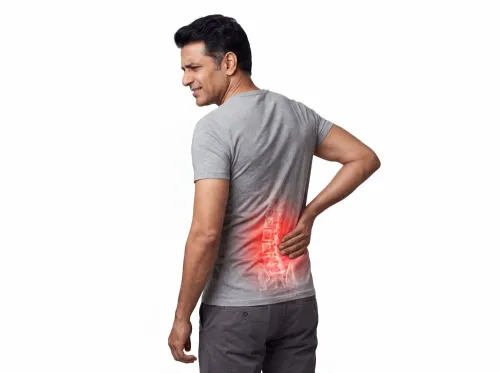
Ask about replacement when persistent joint pain remains unacceptable and prevents meaningful daily activity despite appropriate non-surgical care. The threshold is lived disability, not an X-ray label: severe mobility problems, loss of sleep, difficulty walking and climbing stairs, inability to work or manage personal care, or a progressively worsening deformity all warrant a focused review.
The joint also needs convincing structural damage, such as advanced arthritis, old fracture damage, inflammatory destruction or avascular necrosis.
The discussion becomes reasonable when one or more of these apply:
- Pain continues despite medicines, physiotherapy, activity changes, a walking aid or an injection.
- Pain repeatedly wakes you or causes significant loss of sleep.
- You cannot walk a useful distance, climb stairs, work or complete personal care.
- Stiffness or deformity is worsening and restricts movement.
Severe mobility problems do not prove that the joint is the pain source. A clinician must check for a problem in the spine, nerves, circulation or muscles before recommending replacement, because treating the wrong structure will not restore walking. There is no universal minimum age, but an implant has a finite service life.
Replacement usually reduces arthritic pain and improves function; it does not guarantee a normal joint or unrestricted activity.
Why a severe-looking X-ray is not enough
A severe X-ray does not prove that the joint is causing your disability. X-ray findings can show cartilage loss, deformity or bone damage while causing little pain, so doctors match the image with your symptoms, examination and daily limitations.
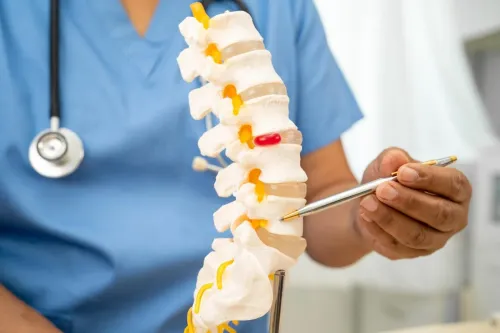
Your history helps locate the pain generator. Pain from hip osteoarthritis can be felt in the groin, thigh or knee, while lumbar spinal stenosis often causes back or leg pain that worsens with standing and improves when sitting. Numbness, tingling or burning raises concern for nerve-root disease or peripheral neuropathy rather than isolated joint disease.
The examination compares joint movement with nerve and circulation findings. A painful, restricted hip or knee movement supports joint disease; weakness, altered reflexes, sensory loss or pain reproduced by spinal movement points toward the spine. Doctors also consider general muscle weakness and vascular disease when walking distance is limited without clear joint pain.
Imaging is selected to test the suspected source. A weight-bearing knee X-ray may confirm osteoarthritis, whereas a lumbar MRI evaluates stenosis or nerve compression. Blood tests can help investigate rheumatoid arthritis, infection or other inflammatory causes; MRI can identify avascular necrosis or damage missed on plain X-rays.
If the source remains uncertain, an image-guided injection of local anaesthetic into the joint can provide useful evidence. Temporary, marked relief supports that joint as the pain source; no relief prompts further investigation before replacement is considered.
How the assessment differs for the knee, hip and shoulder
A replacement fits when the examination, imaging and symptoms point to the same damaged joint. The clinician also checks the spine, nerves, circulation, muscle strength and nearby joints because hip disease can feel like knee pain, while spinal stenosis can limit walking without being a knee problem.
Joint-specific assessment usually looks like this:
| Joint | Examination and tests | What guides the replacement decision |
|---|---|---|
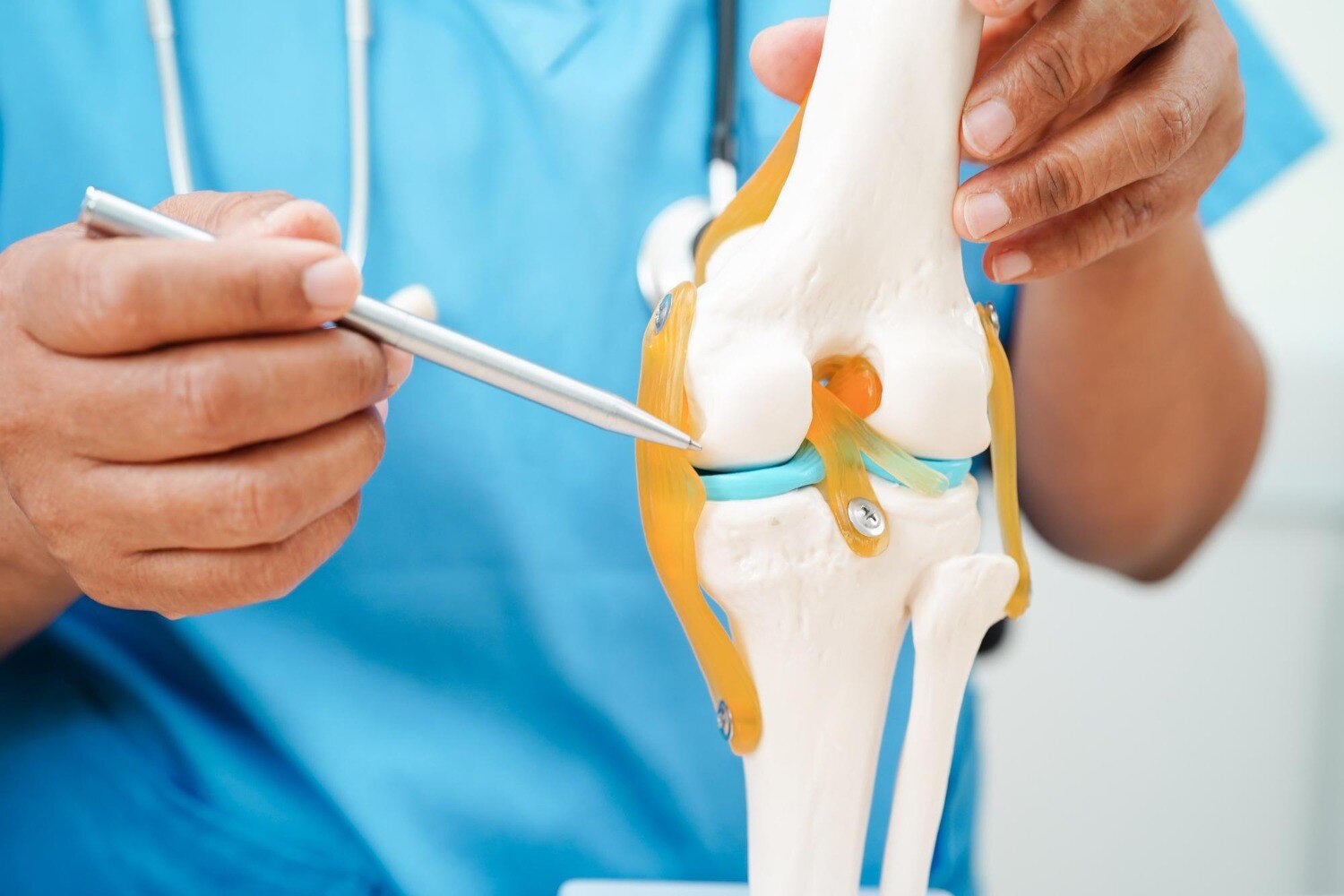
| Knee | Check walking, alignment, swelling, range of motion, ligament stability and tenderness. Obtain standing X-rays, including weight-bearing anteroposterior, lateral and skyline views. | Knee replacement is considered when pain and functional loss match cartilage loss, deformity or bone-on-bone change, and non-surgical treatment has not restored useful mobility. |
| Hip | Assess gait, leg length, hip rotation, flexion and groin pain, then examine the back and knee. Use an anteroposterior pelvis and lateral hip radiograph; MRI is reserved for an unclear diagnosis or suspected alternative problem. | Hip replacement fits when hip pain, stiffness and restricted walking or sleep match joint-space loss, osteophytes, deformity or femoral-head damage. |
| Shoulder | Test active and passive movement, strength, rotator-cuff function, instability and neck nerves. Use shoulder radiographs, including anteroposterior, axillary and scapular-Y views; CT assesses bone loss, while ultrasound or MRI evaluates the rotator cuff. | Shoulder replacement depends on arthritis or fracture damage plus preserved or deficient cuff function, because that finding affects the implant type. |
Ask Dhanvantari Hospital’s orthopaedic team which image demonstrates the pain source and what competing diagnosis was excluded. Blood tests such as CBC, ESR and CRP enter the assessment when infection or inflammatory arthritis is suspected.
Related service
Joint Replacement Surgery At Dhanvantari Hospital, Dr. Anand Upadhye and Dr. Sushant Upadhye provides advanced Joint Replacement Surgery for patients suffering from severe... View service → |
What to compare before choosing surgery
Compare the option that best matches your pain source, joint damage, walking needs and medical risk—not the option with the most dramatic X-ray. Replacement becomes more reasonable when pain persists despite medicines, physiotherapy, activity modification, a walking aid or joint injections, and interferes with sleep, work, stairs or personal care.
| Option | Main benefit | Main trade-off or limitation |
|---|---|---|
| Continued non-surgical care | Improves symptoms without an operation | Does not rebuild advanced cartilage loss; relief may remain incomplete |
| Joint injections | Can provide temporary pain relief or confirm the joint as the pain source | Repeated injections have limits and do not correct deformity |
| Arthroscopy | Treats selected problems such as a loose body or repairable tear | Usually does not help established osteoarthritis |
| Osteotomy | Realigns a damaged joint and shifts load away from one area | Suits selected patients with usable cartilage and requires bone healing |
| Fusion | Reliably removes movement-related pain in a badly damaged joint | Permanently sacrifices joint movement; it is not a routine hip or knee substitute |
| Walking aid | Reduces load and improves safety immediately | Does not stop structural deterioration or correct progressive deformity |
| Replacement | Relieves pain and restores useful movement when the joint is irreversibly damaged | Involves surgical risks, rehabilitation and a finite implant lifespan |
Ask what happens if you wait six or twelve months, what function each option can realistically restore, and which risks apply to your health. Arthroscopy or osteotomy is the wrong match if the pain comes mainly from another joint or the spine; replacement is also unnecessary when symptoms remain manageable.
Health factors, preparation and realistic results
Age alone does not rule out replacement. Younger, active patients may face revision later because implant longevity is finite; older age matters mainly through frailty, muscle strength, bone quality and recovery capacity, not a fixed cutoff.
Your expected activity also shapes the discussion. Low-impact walking, cycling and swimming place different demands on an implant than running, jumping or heavy manual work. Weight increases load on a hip or knee and can slow rehabilitation, but it is one factor—not an automatic refusal.
Before scheduling, the team may address:
- Bone quality: Osteoporosis or weak bone can make fixation and fracture prevention more difficult, so bone treatment and implant choice matter.
- Diabetes: Poor diabetes control raises infection and wound risks; blood-glucose assessment and diabetes control may need improvement first.
- Smoking: Nicotine impairs wound and bone healing. Smoking cessation before surgery and throughout recovery improves the conditions for healing.
- Heart or lung disease: Breathlessness, chest disease or unstable heart problems can increase anaesthetic and clot risks; medical clearance may delay surgery.
- Previous operations: Scars, altered alignment, retained metalwork or earlier infection can make surgery longer and revision planning more complex.
- Active infection: Treat infection anywhere in the body before implantation, because a prosthetic-joint infection can require prolonged antibiotics and further surgery.
Recovery is rarely instant: expect staged walking, exercises and activity restrictions, with progress affected by strength and medical health. Ask which activities are safe and what implant longevity is realistic for your age, weight and goals.
Frequently asked questions
When should severe mobility problems lead to a joint replacement discussion?
Start the discussion when persistent joint pain remains unacceptable and limits walking, stairs, sleep, work, personal care or other meaningful activities despite appropriate non-surgical care. A worsening deformity also warrants focused assessment.
Can a severe-looking X-ray alone justify joint replacement?
No. The decision combines your symptoms, functional limitations, physical examination, X-rays and response to non-surgical treatment. Severe imaging with manageable symptoms does not automatically require surgery.
How does assessment differ for knee, hip and shoulder replacement?
Knee assessment focuses on walking, stairs, alignment and bending. Hip assessment examines groin or thigh pain, walking and hip motion. Shoulder assessment considers pain, overhead reach, strength and the condition of the joint and rotator cuff.
What should you compare before choosing joint replacement surgery?
Compare the diagnosis, non-surgical alternatives, implant and procedure options, surgeon and hospital experience, complication risks, rehabilitation time, expected pain relief and the activities you want to regain.