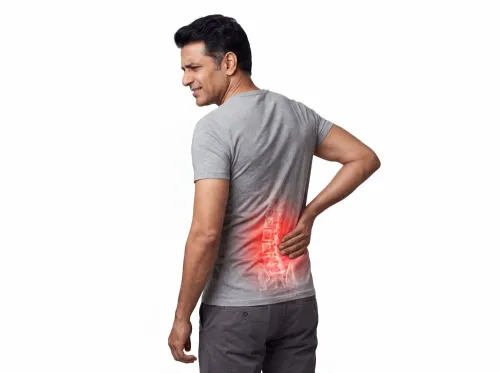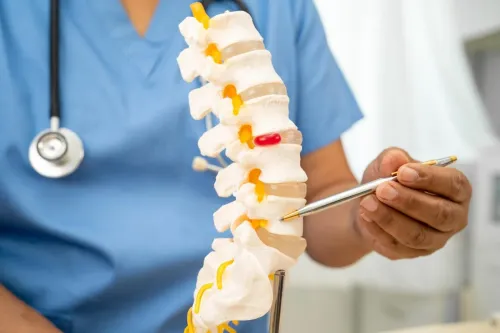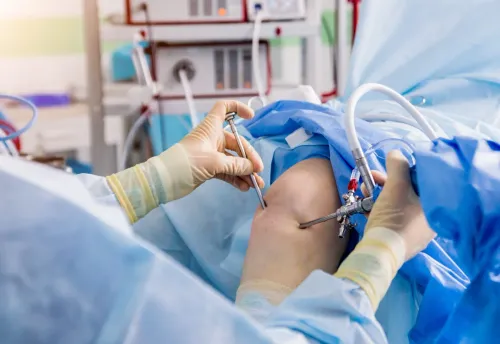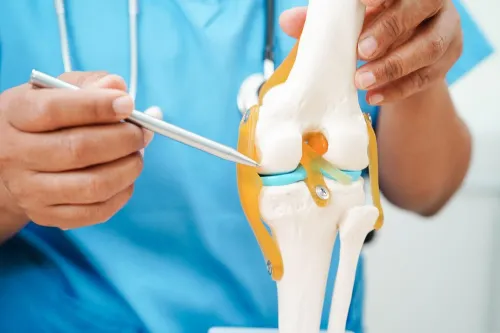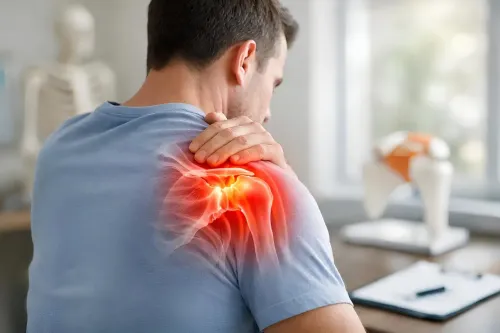
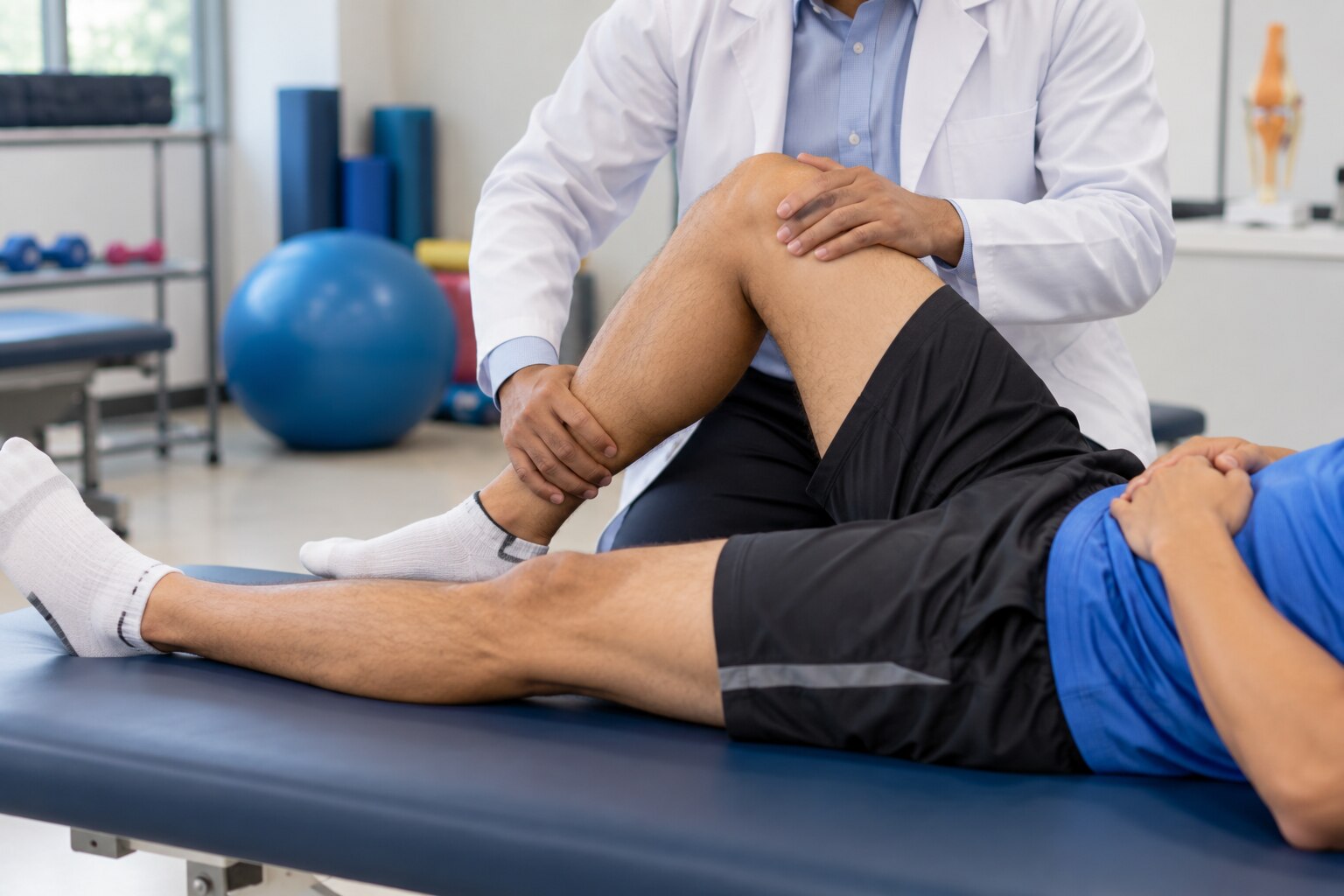
Returning to exercise after an injury involves more than waiting for pain to disappear. You will learn how clinicians build rehabilitation around your injury and goals, measure readiness in stages, increase training load safely and recognise signs that require reassessment.
Key takeaways
- Progress from pain control to strength, balance and sport-specific movement.
- Return when function matches your activity demands, not only when pain stops.
- Increase training load gradually and monitor symptoms for 24 hours.
- Seek reassessment for worsening pain, swelling, weakness or reduced movement.
What sports medicine includes beyond surgery
A sports-medicine recovery plan goes beyond repairing a structure: it matches treatment and training to your current function, daily demands and intended activity. Injury assessment identifies the injured tissue, contributing movement patterns and the loads that caused the problem.
- Load management adjusts training volume, intensity, surface, footwear and technique so you do not repeatedly expose an incompletely recovered body to the original stress.
- Physiotherapy rehabilitation restores movement and builds strength, balance, coordination and control.
- Strength and conditioning rebuild the capacity required for your activity instead of stopping when pain settles.
- Mobility work, movement retraining, bracing or taping and pain control support safe practice during recovery.
- Neuromuscular warm-ups add running, jumping, landing, balance and strength exercises when lower-limb injury prevention matters.
The plan is adapted to your circumstances, not just your diagnosis. A competitive athlete may need repeated landing and change-of-direction testing, while someone returning to physical work needs drills that match lifting, climbing or prolonged standing. Your age, fitness, previous injuries, schedule and return goal all affect the starting load and progression.
Pain relief does not prove recovery; medication or an injection can hide symptoms that would otherwise limit loading. Your clinician also tracks function and sets stop rules, such as rapidly increasing swelling, inability to bear weight or new numbness.
Sports medicine therefore combines medical review with physiotherapy rehabilitation, coaching and regular reassessment before clearing full activity.
How recovery progresses from pain control to sport-specific movement
Pain relief is not the same as recovery. Begin with pain and swelling management, but use swelling, movement and function—not pain intensity alone—to decide whether the next load is safe.
1. Control symptoms. Use the prescribed treatment, protect the injured area from unnecessary load and keep gentle movement. Progress when daily tasks cause no increasing swelling, pain is manageable without masking symptoms, and the joint tolerates light activity.
2. Restore range of motion. Add mobility exercises and gradually work toward the motion needed for walking, climbing stairs or handling equipment. Progress when movement is nearly equal to the other side, or matches the target set for your injury, without a painful or swollen response afterward.
3. Rebuild strength and conditioning. Start with supported or isometric work, then use slow resistance and gradually heavier loading. Progress when you can complete the planned repetitions with controlled technique and no loss of function the next day.
4. Retrain movement. Add balance, single-leg control, landing, changing direction and other movements your activity requires. Progress when you can repeat them without limping, guarding, knee collapse or compensating through another body part.
5. Practise the sport. Move from controlled drills to non-contact practice, full practice and competition. Increase one demand at a time, and hold or reduce the load if symptoms worsen during the session or remain worse 24 hours later.
A tendinopathy flare that increases morning stiffness or reduces function signals that loading has advanced too quickly.
How clinicians decide whether you are ready to return
Pain-free walking is not the same as readiness to compete. Clinicians use return to sport criteria matched to the activity, then watch whether symptoms remain stable during exercise and over the next 24 hours. A passing score alone cannot compensate for poor movement control or fear of reinjury.
| Stage | Physical criteria | Psychological criteria |
|---|---|---|
| Daily activity | Pain and swelling controlled; near-symmetrical range of motion; walking, stairs and work tasks without limping or giving way | You trust the injured area during ordinary movement and are not avoiding necessary tasks |
| Training | Strength is close to the other side; single-leg balance, squats, hops and landing show good alignment; movement retraining holds up when tired | You can focus on technique instead of protecting the injury; confidence supports a gradual increase in load |
| Competition | Complete sport-specific tests at game speed, including acceleration, deceleration, cutting or repeated efforts; finish full practice without a symptom flare | You can make decisions under pressure and accept normal competitive intensity without fear driving your movements |
| Contact sport | Pass sport-specific tests that include unpredictable direction changes, contact preparation and the demands of your position; the joint remains stable afterward | You understand the reinjury risk, feel ready for collision, and can respond to contact without hesitation |
A 90% limb-symmetry result is not automatic clearance: both limbs can be weak after rehabilitation. For ACL recovery, clinicians also consider quadriceps strength, hop quality and confidence; returning before nine months can carry higher reinjury risk for young athletes. Clearance belongs to the treating team, not to a calendar date.
How to rebuild training load without repeating the injury
Increase training load in small, trackable steps rather than testing your pain tolerance. Add duration before intensity, increase frequency only when recovery between sessions is easy, and introduce impact after you can control landing and change-of-direction drills.
1. Start with low-impact activity at a duration you complete without worsening symptoms during exercise or over the next 24 hours. Add minutes before adding speed, resistance or hills.
2. Increase intensity next, then frequency. Keep at least one easier or rest day between demanding sessions, and change only one variable per progression. If swelling, limping, night pain or next-day stiffness increases, return to the last tolerated load.
3. For tendinopathy, graded tendon loading replaces prolonged complete rest. Begin with isometric or slow resistance exercises, then progress to heavier, faster and sport-specific loading. Mild symptoms can be acceptable when they settle to baseline by the next day; persistent worsening or lost function requires reassessment.
4. ACL rehabilitation progresses from strength, balance and controlled single-leg work to jogging, jumping, cutting, non-contact practice and competition. Advance impact only after good landing control and near-symmetrical strength; graft protection and testing determine the pace.
5. After concussion, remove the athlete immediately and do not allow same-day return. Concussion return-to-play uses six steps, normally at least 24 hours apart; recurring symptoms mean returning to the previous symptom-free step and obtaining medical reassessment. A graded return to activity is not unrestricted competition.
When pain is a warning sign and when to seek reassessment
Mild post-exercise soreness during tendon rehabilitation is not automatically a new injury. If symptoms return to baseline by the next day and strength, movement and function remain stable, continue the planned load; persistent worsening or increasing morning stiffness means reduce it and seek reassessment.
| Pattern | What it may mean | What to do |
|---|---|---|
| Mild soreness that settles by next day | Expected response to loading | Continue, while monitoring swelling and function |
| Pain that worsens, morning stiffness increases, or function falls | Load exceeds current capacity | Reduce training and contact your rehabilitation team |
| Inability to bear weight, deformity, rapid swelling, locking, giving way, numbness or weakness | Possible significant injury | Stop activity and obtain prompt medical evaluation |
| Chest pain, unusual breathlessness or calf swelling after surgery | Possible medical emergency | Seek urgent care |
| Headache, dizziness or confusion after a blow | Possible concussion | Remove yourself from play; never return the same day |
Common mistakes delay recovery:
- Using analgesics or injections to push through pain while ignoring swelling, range of motion and strength.
- Increasing distance, intensity or impact before you can control basic movements.
- Repeating the original load without correcting footwear, surface, technique, sleep or conditioning.
- Skipping a regular neuromuscular warm-up containing running, landing, balance and strength drills.
At Dhanvantari Hospital, orthopaedic sports medicine in Panvel can help reassess whether the problem is tissue overload, a missed injury or a broader training error rather than simply increasing pain relief. After concussion, symptoms during any return-to-play step require stopping, returning to the previous symptom-free step and medical review.
Frequently asked questions
What does sports medicine include besides surgery?
It includes injury assessment, pain control, physiotherapy, strength and mobility work, movement retraining, rehabilitation and guidance on training loads.
How does recovery progress from pain control to sport-specific movement?
Recovery moves from reducing pain and swelling to restoring movement, building strength and balance, then practising movements that match your sport or activity.
How do clinicians decide whether you are ready to return?
They assess pain, range of motion, strength, balance, movement quality and whether you can meet the demands of your activity without symptoms.
When is pain a warning sign that needs reassessment?
Seek reassessment when pain worsens, swelling returns, weakness develops, movement decreases or symptoms persist after reducing activity.