
Pain that lasts for weeks is not, by itself, proof that you need an operation. The important questions are whether a specific structure is damaged, whether the problem limits your use of the hand, whether appropriate non-surgical care has been tried, and whether any warning sign makes assessment urgent.
Key takeaways
- Seek assessment after 2 to 6 weeks of persistent symptoms despite activity changes.
- Seek help sooner for deformity, worsening weakness, numbness, or a recent serious injury.
- Examination and targeted imaging help identify the affected bone, tendon, nerve, or joint.
- Splinting, medication, therapy, and activity changes often precede surgery.
How long should hand or wrist symptoms last before you seek a surgical opinion?
Persistence is defined by the symptom and its effect on function, not by a fixed number of days. Arrange an assessment when persistent hand pain, persistent wrist pain, swelling or stiffness continues beyond 2 to 6 weeks despite sensible activity changes. Ask when to see a hand surgeon sooner if you have:
- Inability to fully bend or straighten a finger
- Hand weakness and dropping objects, or worsening grip weakness
- Night pain, clicking with locking, or a visible deformity
- Numbness in the thumb, index and middle fingers
| Situation | What to do | Why timing matters |
|---|---|---|
| Planned opinion for a long-standing problem | Book a non-emergency assessment | The clinician can identify a structural cause and decide whether therapy, splinting, injection or surgery fits |
| Urgent trauma or infection warning | Seek prompt medical assessment | A cold or pale hand, rapidly increasing swelling, open injury, loss of sensation, inability to move a finger, spreading redness, drainage, fever or severe post-injury pain can signal serious damage |
A tendon, nerve or blood-vessel injury can be time-sensitive even when surgery is not ultimately required. Do not wait through a routine appointment if these changes appear after an injury.
Which persistent symptoms point to a structural hand or wrist problem?
Persistent symptoms point to a structural problem when a recognisable pattern affects movement, strength, sensation or hand use, not simply because discomfort has lasted. No single symptom automatically means surgery.
| Pattern | Possible structural explanation | Why assessment matters |
|---|---|---|
| Night tingling or numbness in the thumb, index and middle fingers | Carpal tunnel syndrome | Confirm nerve compression and check for weakness or thumb-muscle wasting |
| Painful clicking or locking finger | Trigger finger | Identify tendon catching rather than assume joint arthritis |
| Thumb-side wrist pain | de Quervain tenosynovitis | Examine the tendon sheath before considering release |
| Palpable wrist or hand lump | Ganglion cyst | Establish whether observation, aspiration or excision fits |
| Loss of tendon function, instability or deformity | Tendon rupture and ligament tear | Determine whether repair or reconstruction is possible |
A wrist injury that remains painful can involve a scaphoid non-union, distal-radius fracture malunion or wrist cartilage injury. A cord that progressively prevents finger extension suggests Dupuytren contracture; pain at the thumb base or advanced wrist arthritis points to joint degeneration.
Persistence prompts diagnosis, not an operation. Surgery needs a structural explanation, meaningful limitation in function or quality of life, and examination findings that support a procedure after suitable non-surgical care has been considered. Pain severity and an X-ray abnormality do not always match.
What examination and tests determine whether surgery is appropriate?
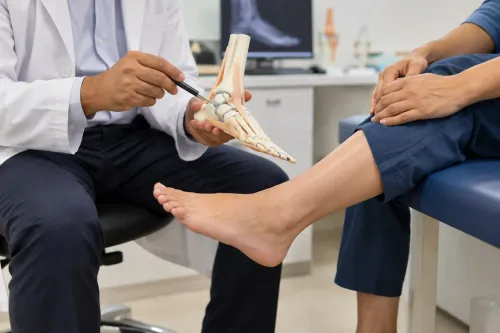
Surgery is appropriate when a structural problem explains your symptoms, limits function, and has not improved with suitable non-surgical care. A hand examination compares grip strength testing, pinch strength, finger and wrist range of motion, tendon movement, joint stability, swelling and deformity.
Sensation testing maps numbness and weakness; examining your neck can reveal cervical nerve disease that resembles carpal tunnel syndrome.
| Test | What it can show | What it cannot decide alone |
|---|---|---|
| Wrist X-ray | Fractures, arthritis, alignment and malunion | Whether an abnormality causes your symptoms |
| Ultrasound | Tendons, nerves and a ganglion | The full extent of deep cartilage or ligament injury |
| MRI | Cartilage, ligaments, tendons, occult scaphoid injury and other soft tissue | Whether surgery will improve function |
| CT | Complex fractures and detailed joint surfaces | Whether fixation benefits you |
| Nerve-conduction study | Evidence supporting carpal tunnel syndrome and nerve compression | Whether an operation is automatically necessary |
An abnormal scan or nerve-conduction study does not mandate surgery. A normal or borderline nerve-conduction study does not exclude carpal tunnel syndrome. The clinician matches every result with your symptoms, examination findings, functional loss and alternative diagnoses before recommending an operation.
What non-surgical care is usually tried before hand or wrist surgery?
Conservative treatment before surgery usually starts with a diagnosis-specific trial, then changes only when symptoms or examination findings show that it is not working.
1. Reduce gripping, repetitive wrist movement or the activity that triggers pain. A wrist or finger splint, including splinting for hand pain, can rest irritated tissues. Medicines for pain or inflammation, hand therapy and exercises that restore joint motion or tendon glide may follow.
2. A corticosteroid injection can help carpal tunnel symptoms, trigger finger, de Quervain tenosynovitis or thumb-base arthritis. Mild, intermittent carpal tunnel tingling does not automatically require release; surgery becomes more relevant when splinting fails, nerve-conduction testing shows significant compression, or examination finds weakness or thumb-muscle wasting.
3. Reassess trigger finger after activity changes, splinting or injection. Severe or recurrent locking favours pulley release. De Quervain symptoms often improve with immobilization and injection, so first-compartment release is reserved for symptoms that continue or return.
4. Observe a painless ganglion that does not restrict use. Aspiration is less definitive because the cyst’s stalk or joint connection remains, so recurrence is common; excision also carries risks such as stiffness and scar sensitivity.
Escalate the discussion when pain, locking, numbness, weakness or restricted use persists despite an adequate trial. A new deformity, rapidly worsening weakness or numbness, or severe post-injury pain needs prompt assessment rather than routine follow-up.
Which diagnoses may need surgery, and what operation matches each structure?
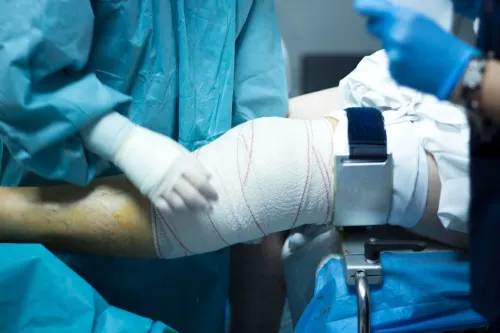
“Hand surgery” describes different operations, not one procedure with one recovery. The target may be a nerve, pulley, tendon, ligament, bone, cartilage, cyst or arthritic joint. The diagnosis determines both the operation and the risks.
| Diagnosis or structure | Operation that may match | What the operation addresses |
|---|---|---|
| Carpal tunnel syndrome | Nerve decompression | Pressure on the median nerve, especially with persistent numbness, weakness or muscle wasting |
| Trigger finger | Release of the constricting pulley | A tendon catching under a tight pulley, not arthritis in the finger joint |
| Tendon rupture | Tendon repair | A torn tendon that prevents normal finger or thumb movement |
| Ligament tear | Ligament repair or ligament reconstruction | Joint instability caused by damaged supporting tissue |
| Scaphoid fracture | Fracture fixation, sometimes with bone grafting | Displacement or non-healing that threatens wrist strength and blood supply |
| Distal-radius fracture or malunion | Fracture fixation | Post-reduction radial shortening over 3 mm, dorsal tilt over 10 degrees or joint step-off over 2 mm supports consideration in many non-geriatric patients; age, bone quality, instability, joint involvement and functional demands also matter |
| Dupuytren contracture | Cord release or removal | A function-limiting cord that blocks finger extension, not an isolated painless nodule |
| Thumb-base arthritis | Trapeziectomy-based surgery | Persistent pain and loss of daily function after non-surgical care fails |
| Wrist cartilage injury | Wrist arthroscopy | Diagnosis or treatment of selected cartilage and internal wrist injuries |
Advanced wrist arthritis may require fusion, which removes painful wrist motion, or replacement, which preserves some motion but risks loosening, wear, instability and revision. Ganglion excision suits pain or functional limitation; discuss recurrence, scar sensitivity and stiffness.
How should you plan the next step for a long-standing hand or wrist problem?
Start by making a one-page symptom record before a planned hand surgery consultation: note when symptoms began, which movements trigger them, whether numbness wakes you, and which objects you can no longer hold. An orthopaedic assessment in Panvel can match these details to examination and test findings.
Dhanvantari Hospital is one local option for discussing persistent hand, wrist or trauma-related symptoms with an orthopaedic team.
Bring:
- Prior X-rays, scan reports and injury records.
- Injection dates and response.
- Splint type, wearing duration and result.
- Therapy exercises, medicines and how long you tried each.
| Next step | What it means | When it applies |
|---|---|---|
| Continue rehabilitation | No urgent structural threat; adjust therapy | Function is improving |
| Planned operation discussion | A defined problem limits use despite treatment | Findings match persistent loss |
| Urgent referral | Waiting risks tissue or nerve damage | Pale or cold finger, spreading redness, drainage, fever or rapidly worsening weakness |
Ask what structure is treated, what waiting risks, which activities recovery restricts, and your hand surgery recovery questions. Decision rests on diagnosis, functional loss, findings, treatment response and goals.
Related services
Hand, Foot and Ankle Surgery At Dhanvantari Hospital, Dr. Anand Upadhye and Dr. Sushant Upadhye provides advanced diagnosis and surgical treatment for various hand, foot, and... View service → |
Arthroscopy and Sports Medicine Treatment Arthroscopy and Sports Medicine Treatment At Dhanvantari Hospital, Dr. Anand Upadhye and Dr. Sushant Upadhye provides advanced Arthroscopy and Sports Medicine treatments for patients... View service → |
Frequently asked questions
How long should hand or wrist symptoms last before you seek a surgical opinion?
Arrange an assessment when pain, swelling, stiffness, or reduced function continues beyond 2 to 6 weeks despite sensible activity changes. Seek help sooner after a serious injury or when weakness, numbness, or deformity appears.
Which persistent symptoms point to a structural hand or wrist problem?
Ongoing pain in one precise area, swelling, restricted movement, clicking, instability, visible deformity, grip weakness, or persistent tingling can point to a problem involving a bone, joint, ligament, tendon, or nerve.
What examination and tests determine whether surgery is appropriate?
A clinician checks movement, strength, sensation, tenderness, stability, and tendon function. X-rays assess bones and alignment; ultrasound or MRI can assess tendons, ligaments, cartilage, nerves, and other soft tissues.
What non-surgical care is usually tried before hand or wrist surgery?
Treatment may include activity modification, a splint or brace, pain relief, treatment for inflammation, hand therapy, exercises, and treatment of an underlying condition. The choice depends on the diagnosis and severity.
Which diagnoses may need surgery, and what operation matches each structure?
Examples include fracture fixation for unstable fractures, tendon repair for a torn tendon, ligament reconstruction for instability, nerve decompression for pressure on a nerve, and joint procedures for selected arthritis or cartilage problems.
Related service
Fractures Treatment & Surgery At Dhanvantari Hospital, Dr. Anand Upadhye and Dr. Sushant Upadhye provides expert diagnosis and advanced treatment for all types of bone fractures,... View service → |